



Doi Inthanon is the highest mountain in Thailand, and for most travellers it is one of the main nature trips from Chiang Mai. Our team lives on Koh Phi Phi, so we plan Doi Inthanon trips with local guides we book directly in the north. We have walked the ridge, stood under the pagodas and driven the loop in both dry and hazy weather, and this guide is what we actually tell our guests.

It is a full day, with a long road up, a chain of stops at very different altitudes and a real change of temperature. Here is what you see, who it suits, when the view is open, and how to decide between a tour, a private driver and a self-drive.

Is Doi Inthanon worth a full day?
Short answer: yes, if you want more than another temple. You get a national park with proper forest, cool mountain air, two royal pagodas with wide-open views on a clear day, a short alpine-style ridge walk and several waterfalls, all in one loop.
It is not worth the trip if you only want a quick selfie at the summit sign. The actual peak sits inside the trees and the view from the marker is limited. The reward of Doi Inthanon is the whole chain of stops, not the single summit point.
If your time in the north is tight, compare it with other options in our things to do in Chiang Mai list before you commit a full day.
What you actually see at the summit
The very top is a forested dome, not a bare peak. You park, walk a short boardwalk through mossy, dripping trees and reach the sign that marks the highest point of Thailand. The forest here feels more like a cloud forest than a tropical jungle.
Expect cool, often damp air. Clouds move through the branches. Birdlife is rich and the ground is covered in moss and ferns you will not see down in the city.
It is a quiet, short visit, usually first or last on the loop. The real wide views come from the pagodas and the ridge, not from the summit itself.

The twin royal pagodas
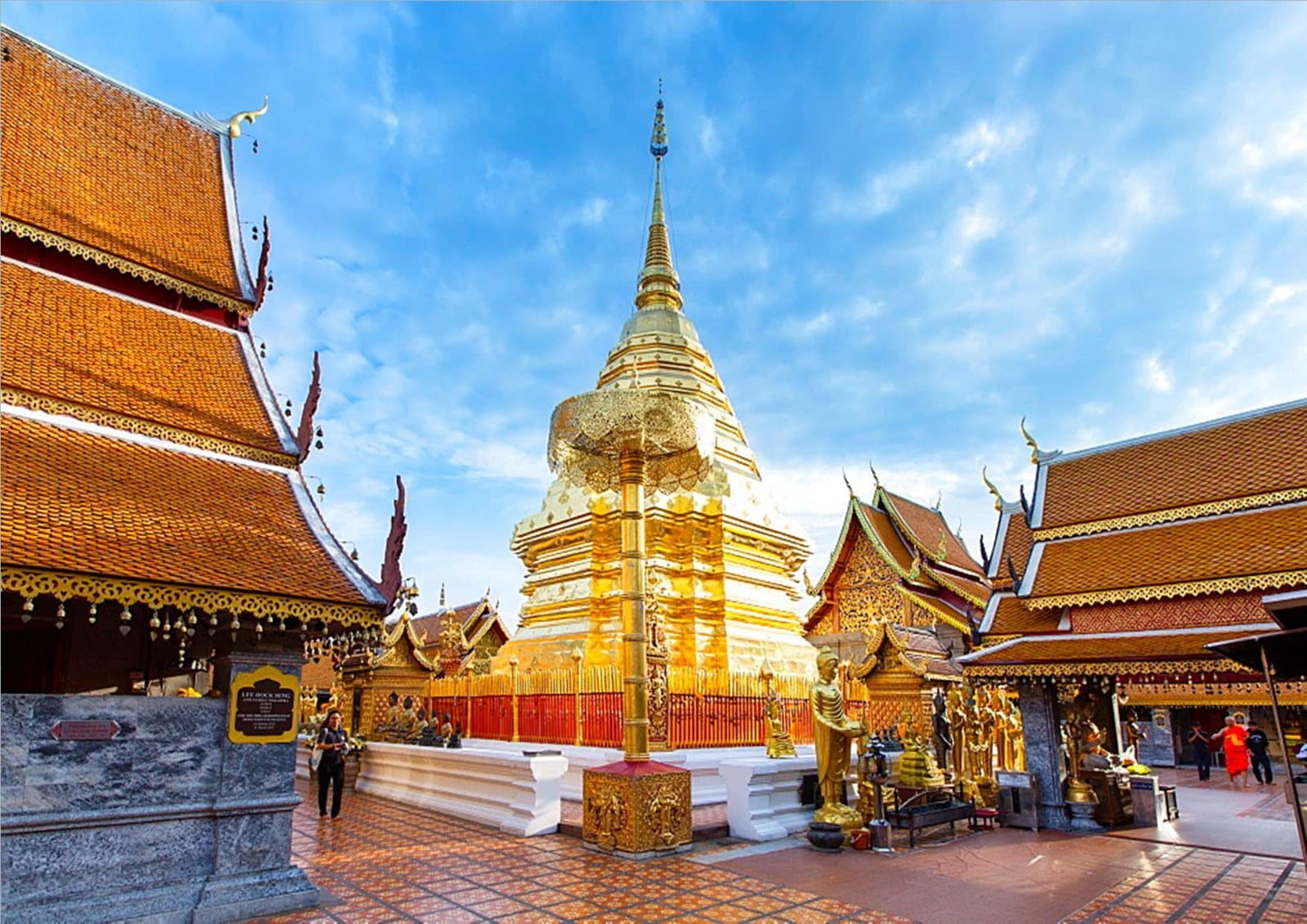
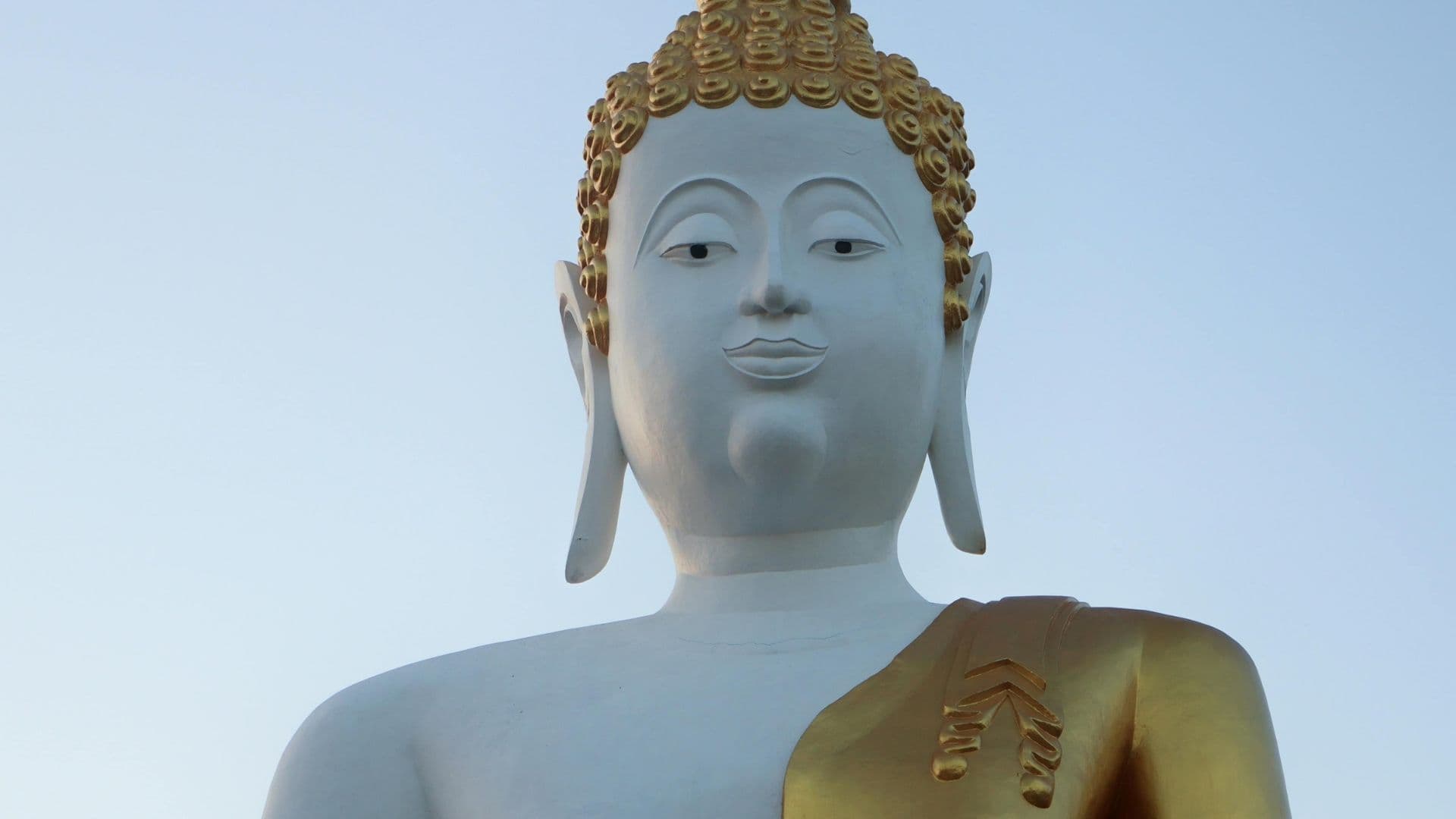
A little below the summit sit two royal chedis, one built in honour of the late King, one in honour of the Queen. They stand on opposite sides of a landscaped garden with stairs, lifts and terraces.
On a clear day the view across the valleys is the best panorama in the park. On a cloudy day you see the inside of a cloud and the gardens still look good, just softer.
It is an easy stop for every fitness level. Dress modestly for the shrine areas, covered shoulders and knees, as at any Thai temple. Our Doi Inthanon tour puts the pagodas in the right order with the rest of the loop.
Kew Mae Pan: the ridge walk that steals the day
For many of our guests, the Kew Mae Pan nature trail is the highlight. It is a short ridge loop through cloud forest and open grassland, with a long drop on one side and layered mountain views on the other.
It is not a hard trek. It is a steady walk on a rough path, with roots and uneven ground. Local Karen guides can accompany you on the trail. You will want closed shoes and a warm layer.
Important: the trail is seasonal, check current status before going. In the open months you can book it with the park guides directly or with us through our Kew Mae Pan hike, which pairs the ridge with the classic sights of the park.
Waterfalls and ecosystems at altitude
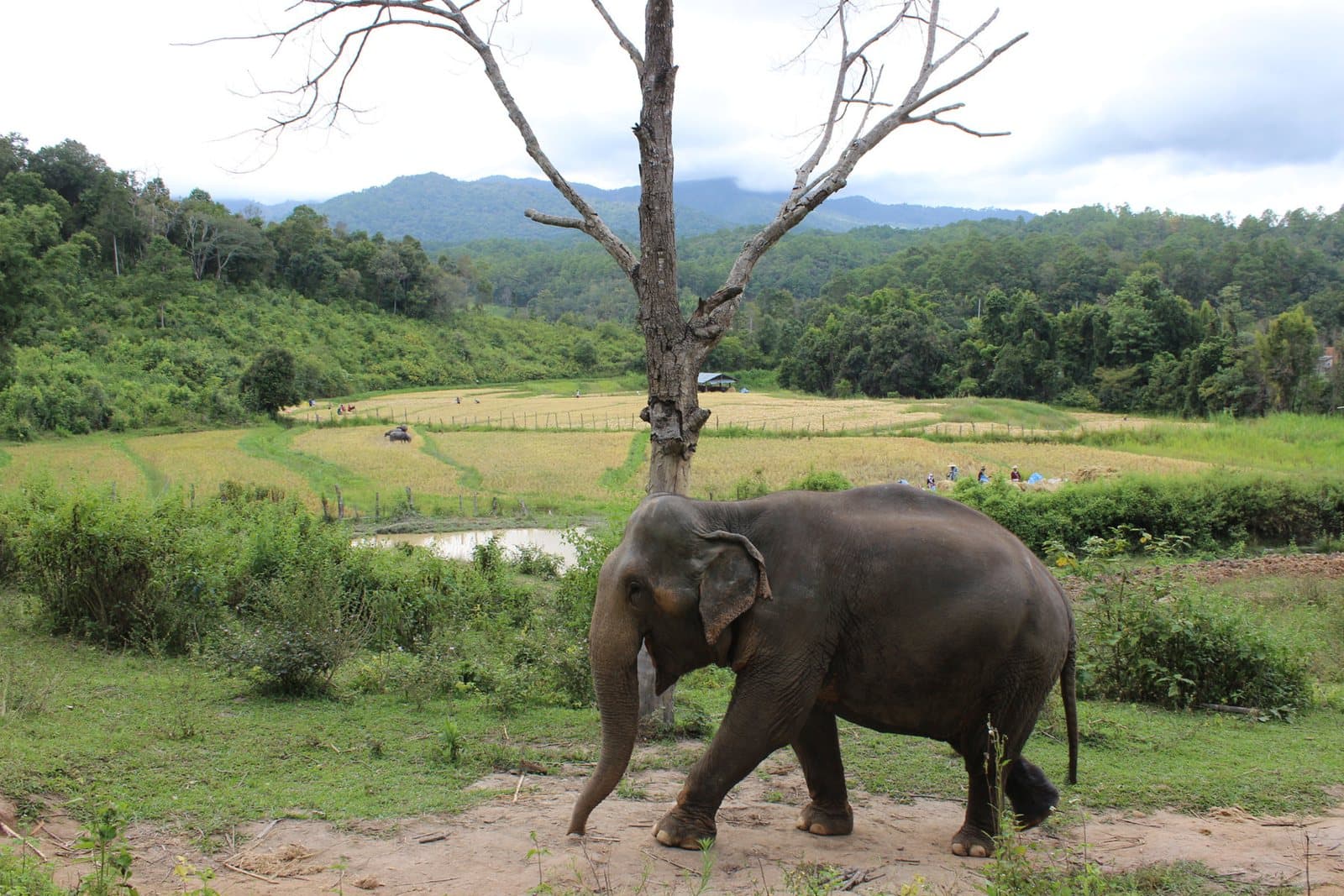
Doi Inthanon stacks very different habitats on one road. Near the base you drive through farmland and lowland forest. Higher up the trees change, mosses appear, then rhododendrons near the top. Mornings at the top can feel surprisingly cold.
Several waterfalls sit along the way. Some are tall, roadside drops you see from a viewpoint. Others ask for a short walk through the forest. After the rainy season they are loud and full. In the dry season they are gentler but still worth the stop.
We pick the stops with our driver based on the day: a tour that tries to hit every single fall ends up rushed. Fewer, longer stops almost always feel better.
Karen villages and highland life
The park is home to Karen and Hmong highland communities who have farmed these slopes for generations. You will see terraced rice paddies, coffee bushes under forest shade and strawberry fields near the top.
Some loops add a short visit to a village market or a royal project where highland produce is sold. It is a chance to taste local coffee, buy a small handicraft and support the people who actually live on the mountain.
We tell our guests to keep it respectful: ask before photographing people, and buy something small rather than treating a village like a photo stop. A good guide, like the ones on our Doi Inthanon tour, will explain what you are looking at.
When the view is clear, and when it is hidden
The views on Doi Inthanon depend heavily on the season. Roughly from November to February the air is cool and dry and the chance of a wide, clear panorama is at its best. Early morning is the window: clouds build up as the day warms.
From roughly February to April, northern Thailand gets hazy because of agricultural burning in the region. Some days the pagodas look out onto a wall of smoke. Check an air quality app the night before and be ready to adapt. This is the main honest warning we give our guests.
In the rainy months, from roughly June to October, the forest is at its greenest and the waterfalls are loud, but clouds often sit on the top. You can still enjoy the mountain, just not the long-range view.
Self-drive, private driver or guided tour?
Self-drive is possible but the road is long, steep and tiring. The road is paved but full of tight bends. In fog or rain it is demanding, and you will spend more time on logistics than on the mountain.
A private driver with a car and a park guide on site is a good middle option: you keep flexibility, you skip the driving, and you get help at the Kew Mae Pan trailhead.
A guided option like our Doi Inthanon tour is the easiest: everything is organised for you. For the ridge, our Kew Mae Pan hike adds the walk. If you want wilder jungle on a different day, look at our private 4x4 Mae Chaem jungle trip, which goes deeper into the backcountry on the other side of the massif.
What to pack, park fee and practical notes
A warm layer is not optional. The summit is much colder than the city, and in the cool season a light fleece or jacket makes the difference between enjoying the pagodas and shivering through them. Add a rain layer any time of year: mountain weather is its own thing.
Closed shoes with grip are the right choice for Kew Mae Pan and the waterfall paths. Bring water, sunscreen for the open viewpoints, cash for snacks at the stalls, and a form of ID with you as usual in Thailand.
There is a national park entrance fee paid on arrival. The amount can change, so we do not quote a number here: our tour and the park signs show the current rate. Ask on arrival about the trail guide arrangement.
Who Doi Inthanon suits (and who should skip it)
It suits travellers who want nature after a few days of temples and street food, families with older children who can handle a full day in the car, photographers who like layered mountain views and anyone curious about highland life.
It is a harder sell for very young children, for travellers who get carsick on winding roads, and for anyone with mobility issues who cannot manage stairs and uneven paths. If that is you, the pagodas with the lifts are doable, the ridge is not.
If you only have one day left and you have not seen a famous temple yet, Doi Suthep above the city is shorter and easier. See the Chiang Mai destination page for how the main day trips compare.