



Chiang Mai turns into a different city once the sun drops. In photos they look alike. In person they are not the same evening at all.
Our team lives and works on Koh Phi Phi, and we plan Chiang Mai trips with local guides we book directly up there. The question we get most often from travellers heading north is simple: which one should I go to tonight? Here is the honest breakdown, by what you actually want out of your evening.

Which night market or walking street to pick tonight
Short answer, then the detail further down.
- Any night of the week: the Night Bazaar area east of the Old City. Reliable, touristy, easy.
- Saturday evening: the Wualai walking street, south of the moat.
- Sunday evening: the Tha Phae walking street, right through the Old City. The biggest one.
- You want food, not shopping: skip the walking streets and head to the local evening food lanes near the north gate or the Warorot market area.
If you only have one night and it is not a weekend, the Night Bazaar is the default. If your one night happens to land on a Sunday, do not miss the Sunday walking street even if it is busy. More on each below, including who each one is not for. If you want the wider picture of what else to do after dark, our things to do in Chiang Mai guide has the full list.
The Night Bazaar area: the one that runs every night
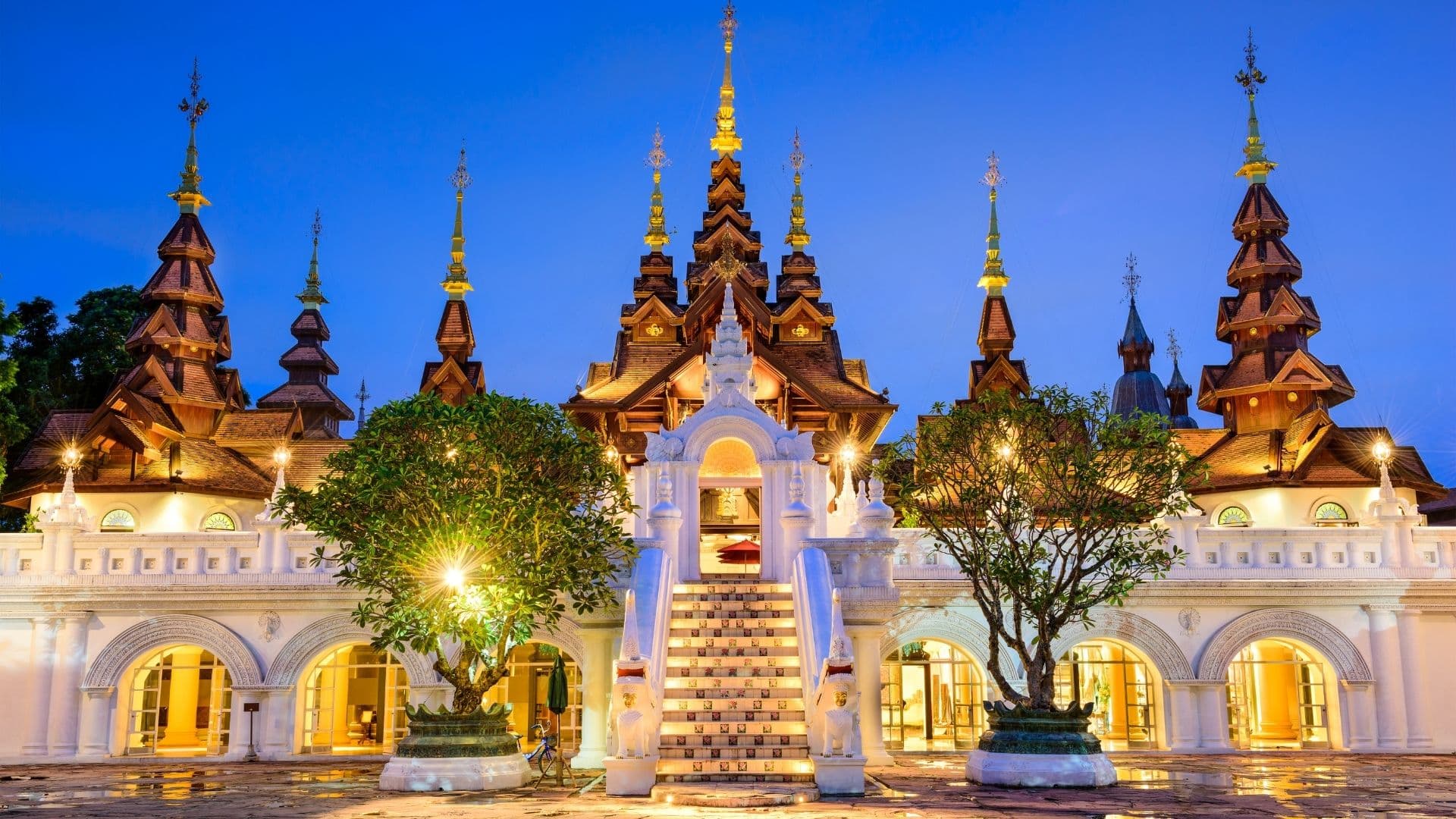
The Night Bazaar sits on Chang Klan Road, just east of the Old City moat. Several covered plazas open off the street with their own food courts and bars, and the pavement fills with stalls selling souvenirs, bags, lamps, T-shirts, carved wood, and the inevitable elephant pants.
Atmosphere: lively, a bit chaotic, heavy on tourists, light on locals. Street performers work the sidewalks. Massage chairs line up outside the plazas. A couple of the food courts have stages with live cover bands.
It is good for a first night when nothing else is on, for families who want a predictable evening, and for anyone who just wants to eat, buy a few gifts and have a drink without planning. It is not for travellers hunting authentic craft or local atmosphere. The quality of what you buy here is uneven, and you will see the same mass-produced items stall after stall. Come hungry, browse, do not expect a revelation.
Sunday walking street: the big one, every Sunday evening
The Sunday walking street runs along Ratchadamnoen Road, from the Tha Phae Gate deep into the Old City. The road closes to traffic. Stalls spill out of every side soi. Temple courtyards along the route turn into food zones.
This is where the crafts step up. Hill tribe textiles, hand-stamped paper, silver jewellery, carved soap, incense, screen-printed shirts from small studios, natural soaps and oils. You will still see tourist filler, but the ratio of real handmade work is much higher than at the Night Bazaar. Musicians play in the temple yards. Buskers set up along the route.
Crowd: very dense once the sun is fully down, especially in high season. The flow slows to a shuffle around the main intersection.
Go early evening if you want to actually move, photograph and shop. Push later only if the crush is part of the fun for you. It is not for anyone claustrophobic, nor for travellers with very young children in a stroller. The side-soi food courts inside the temples are calmer than the main road.
Saturday walking street: smaller, calmer, more local
The Saturday walking street takes over Wualai Road, which starts just south of the moat at the Chiang Mai Gate. It is the silversmith district, and that heritage still shows: more handmade silver, more small ateliers, less bulk tourist stock.
This one is smaller than the Sunday street and easier to walk. You will see more local families out shopping and eating alongside travellers. It gets busy, but it does not reach the full Sunday crush.
We send travellers here when they want the walking-street vibe without the squeeze, or when they are in town both weekend nights and want to do both. The food runs more northern Thai than international. If you are only in Chiang Mai for a short stay, work out which weekend night falls in your window and plan around it: our short Chiang Mai itineraries are built around which walking street you can catch.
Local evening food streets: where residents actually eat
These are not markets in the postcard sense. They are clusters of food stalls on normal street corners where Chiang Mai residents grab dinner.
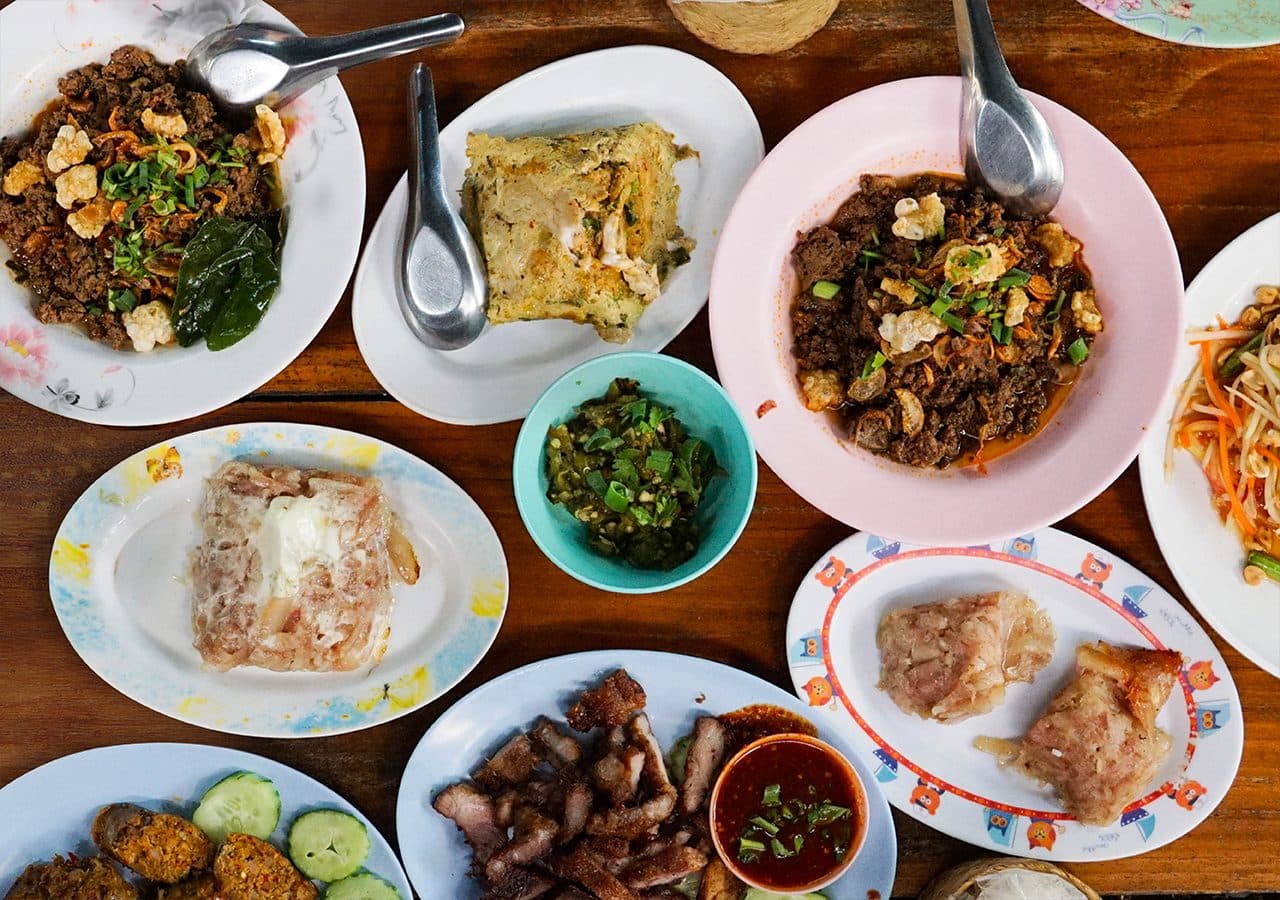
The lanes just outside the Chang Phueak north gate are the obvious one: plastic stools, charcoal grills, khao soi bowls, grilled pork on a stick, rice and curry in trays. The lanes around the Warorot market also come alive again in the late afternoon and early evening with fruit, sweets and takeaway dishes. Smaller food clusters pop up near the universities.
Come here if you want dinner, not souvenirs, and if you are happy sitting on a plastic stool next to a motorbike. You will spend less and eat better than at the Night Bazaar food courts.
If you are new to northern Thai food or want someone to decode the stalls and order the good things in the right order, our Chiang Mai street food tour does exactly that with a local guide.
What to eat at Chiang Mai's night scenes
A short list of things we tell travellers to try at least once:
- Khao soi: the northern curry noodle, coconut-rich, with crispy noodles on top.
- Sai ua: northern Thai herb sausage, grilled.
- Nam prik: chilli dips eaten with sticky rice and raw vegetables.
- Sticky rice with mango: better when mango is in season.
- Grilled pork skewers (moo ping) and grilled fish stuffed with lemongrass.
- Roti: the sweet fried flatbread, usually with banana and condensed milk.
Carry small bills. Many stalls do accept QR payment, but it is slower. Vegetarian is possible everywhere once you learn the phrase, though some pastes contain shrimp. If you want to learn to cook what you eat, a Lanna cooking class focuses on the northern dishes you see on these streets.
What to actually buy, and what to skip
Buy on the weekend walking streets, not the Night Bazaar, when you care about quality.
Worth your money: hill tribe woven textiles, hand-painted paper umbrellas from the Bo Sang tradition, small silver pieces on Wualai, natural soaps, mulberry paper notebooks, hand-forged kitchen knives from craft stalls, loose-leaf northern teas.
Skip, or at least do not overpay for: the same mass-produced elephant pants everywhere, generic fridge magnets, printed T-shirts with cracked designs, cheap sunglasses, and anything claiming to be ivory or old Buddha statues.
Bargaining is light here. A polite smile and a counter-offer is fine. Walking away usually gets a better price, but do not grind a hill tribe weaver over a small amount for an item that took real work to make.

Getting around in the evening
Chiang Mai is compact. From most hotels inside or just around the Old City, the Night Bazaar is a flat walk. The Sunday walking street starts at the eastern Tha Phae Gate. The Saturday walking street starts at the southern Chiang Mai Gate.
Red songthaews (shared pickup trucks) circulate all evening. Agree on the price before you climb in. Ride-hailing apps work in town. Tuk-tuks run but will ask more.
For a slower, more memorable way to see the Old City and the Warorot market area before a walking-street night, we book travellers on a samlor ride through the Warorot lanes, the old cycle rickshaw of Chiang Mai. A sunset electric tram around the Old City covers more ground for less walking, and a tuk tuk evening with a Muay Thai fight stitches a walking-street stop into a bigger night.
Practical tips for a good night out
A few honest notes from planning a lot of these trips.
- Start before full dark. Photos are better in the blue hour, crowds are thinner, and food stalls are freshly stocked.
- Eat before you shop. Walking streets get too packed later to carry food through.
- Carry a small bag you can see. Pickpocketing is not rampant, but crowds are crowds.
- From roughly February to April the air in Chiang Mai is often hazy and smoky from agricultural burning: check the day's air quality before committing to a long evening outdoors.
- Cool season nights (roughly November to February) can be properly cool. Bring a layer.
- If you are travelling on from Chiang Mai to the islands, start planning the next leg early: our Chiang Mai destination page links to the onward transport guides.