






Our team lives on Koh Phi Phi, far down south on the Andaman coast. For Chiang Mai, we plan trips and work with local guides and cooking teachers we book directly. A cooking class is a lovely way to understand northern food.
The question we hear most is not whether to book, but which class. Chiang Mai offers two quite different experiences: a classic Thai class built around the dishes famous worldwide, and a Northern Thai class built around Lanna food, the cooking of the north. This guide explains what each one really looks like, what you cook, and who each one is for.
Is a Chiang Mai cooking class worth it?
For most travellers, yes. You learn what is actually in the food you have been eating all trip. You handle herbs you could not name before. And you eat very well.

You do not need to be a good cook. Teachers expect beginners. The prep is done with you, step by step, and the hard part (balancing sour, salty, sweet and spicy) is exactly what they teach.

The real choice is the style. Go classic Thai if you want to recreate your favourite dishes at home. Go Northern Thai if you want something you can only really learn here. Both are good. They are just different days.

What a cooking class actually looks like
Formats vary, but most classes in Chiang Mai follow the same shape. You meet the teacher, often visit a local market, then move to a kitchen where each person has a cooking station. You cook dish by dish and eat as you go.
The market visit is the part people underestimate. A good teacher walks you through the stalls and shows you the difference between galangal and ginger, holy basil and Thai basil, fresh and dried chillies. You see curry paste sold by the scoop and sticky rice in big baskets. It turns a recipe into something you understand.
Expect a shared kitchen with other travellers rather than a private lesson. It is social and relaxed, and you will chat with people from all over. If you want a quieter experience, tell us when you book and we will tell you honestly what to expect.
Whether a market visit, transport and recipe notes are part of our classes is shown on each tour page, so check there rather than assuming.
The classic Thai cooking class: what you cook
This is the class built around the dishes you already know from Thai restaurants at home. Classic Thai classes usually teach dishes like:
- Green curry: coconut milk, fresh green curry paste, Thai basil. Many classes have you pound the paste yourself in a mortar, which is hard work and very satisfying.
- Pad thai: stir-fried rice noodles with tamarind, egg, peanuts and bean sprouts. You learn why street versions taste better than most restaurant ones abroad.
- Tom yum: hot and sour soup with lemongrass, galangal and kaffir lime leaves.
Often there is a choice between dishes at each step, so a couple can cook different things and share. The recipes travel well: the ingredients are easier to find outside Thailand, which matters if you want to cook them again.
Check the tour page for this class's menu: our Thai cooking class in Chiang Mai.

The Northern Thai (Lanna) class: what you cook
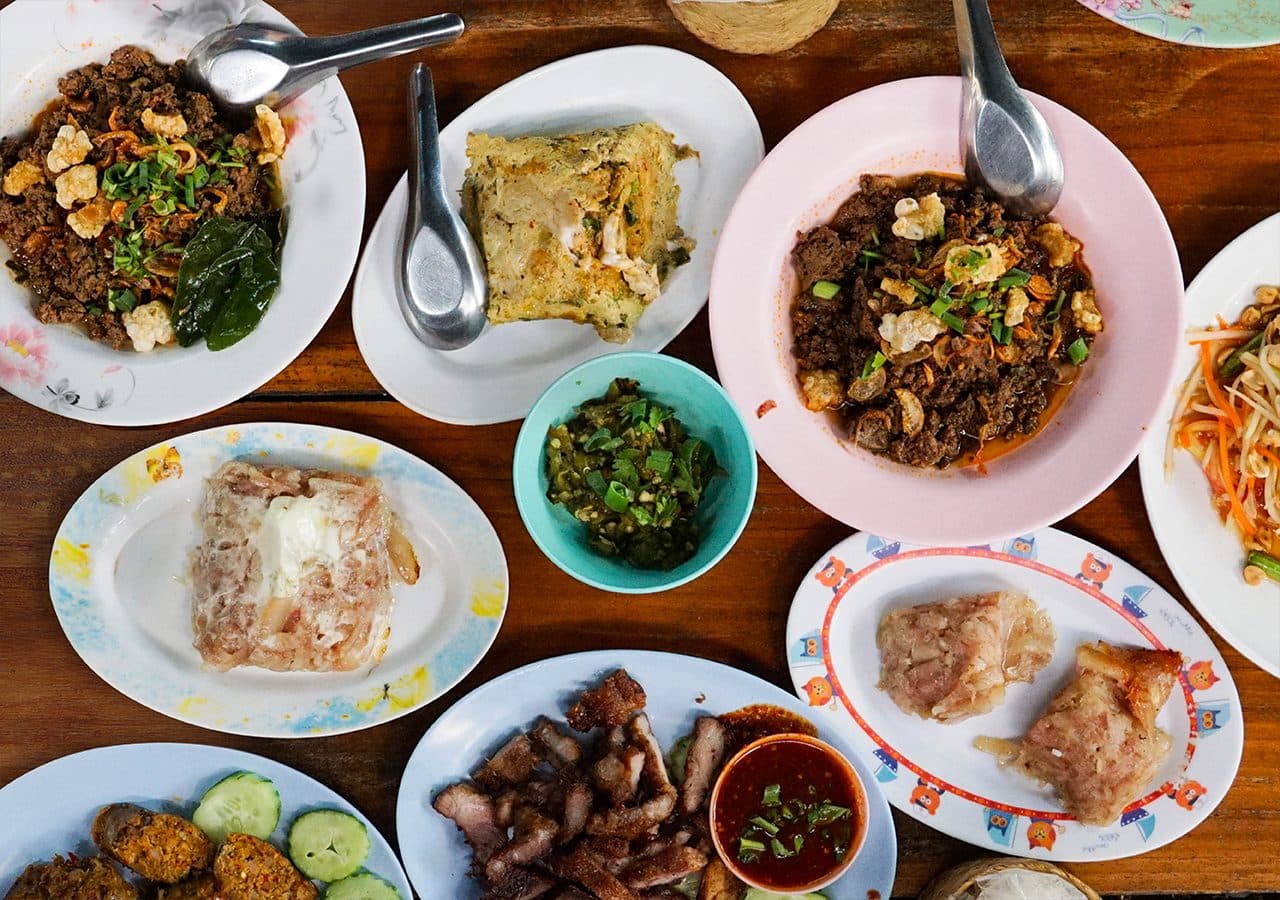
Lanna food is the cooking of the old northern kingdom, and it tastes different from what you find on the coast. Less coconut milk, more herbs, more grilling, and sticky rice eaten with your hands.
Northern Thai classes usually teach dishes like:
- Khao soi: the signature dish of Chiang Mai. A rich curry noodle soup with soft egg noodles in the bowl and crispy fried noodles on top, served with pickled greens, shallots and lime.
- Sai ua: northern herb sausage, packed with lemongrass, kaffir lime and chilli, then grilled.
- Nam prik: chilli dips eaten with vegetables and sticky rice. Nam prik ong is a mild pork and tomato version, nam prik noom is a smoky green chilli one.
This is the class for people who want to understand the region they are visiting. Some ingredients are harder to find at home, so think of it as a food experience first and a recipe collection second.
Check the tour page for this class's actual menu: our Northern Thai cooking class in Chiang Mai.
Classic Thai or Lanna: who each class suits
Pick the classic Thai class if:
- It is your first trip to Thailand and you want the famous dishes.
- You want recipes you will actually cook again at home.
- You are vegetarian, or travelling with picky eaters or children.
Pick the Northern Thai class if:
- You have already eaten plenty of green curry and pad thai.
- You are curious about regional food and want something you will not find in the south.
- You love khao soi and want to know how it is made.
If you are torn, here is our honest tip: take the Lanna class, and eat pad thai at a night market. Northern dishes are the ones you will miss when you leave the north.
Vegetarian, vegan and allergies
Vegetarians usually manage well, especially in the classic Thai class. Curries, stir-fries and soups adapt easily with tofu and vegetables.
The Lanna class is trickier. Northern cooking leans on pork, and sai ua is a pork sausage. Some dishes can be adapted, some cannot. Ask before you book.
Vegans should know that fish sauce and shrimp paste sit at the base of a lot of Thai cooking, including many curry pastes. A good teacher will swap them, but only if they know in advance.
For allergies, especially peanuts and shellfish, tell us when you book so we can pass it on clearly. Do not wait until you are standing at the cooking station.
Who a cooking class is NOT for
A cooking class is a slow, hands-on experience. If you get restless standing in one place, you may prefer to walk and eat instead. Our Chiang Mai street food tour covers more dishes with less effort.
It is also a lot of food. Do not plan a big meal right after. You will probably not be hungry for a while.
In the hot season, roughly March to May, kitchens get warm. Wear light clothes. If heat bothers you a lot, a class in the cooler part of the day is easier.
Finally, if you only want to taste Thai food and have no interest in how it is made, a class is a nice extra, not a must.
Fitting a cooking class into your trip
A class works well on your first or second day. You learn the names of dishes and herbs, then you order with confidence for the rest of the trip.
It also makes a good calm day between bigger outings like Doi Suthep or Doi Inthanon. Our Chiang Mai 3 day itinerary shows how to slot it in.
If the market visit hooks you, go deeper. A ride around Warorot market on our Chiang Mai by samlor tour, or an evening at the night markets and walking streets, lets you put your new vocabulary to use.
From roughly February to April the air in Chiang Mai is often hazy and smoky from agricultural burning. An indoor activity like a cooking class is a good choice on bad air days. Check air quality before you plan outdoor trips.
How to book
Both classes above are on our site. The tour cards show the real live price and duration, so check there rather than relying on anything you read in a blog.
You can book online until 18:00 Bangkok time the day before. In busy periods, book earlier so you get the day you want.
For more ideas, see our full list of things to do in Chiang Mai. If you have a question about diet, children or which class fits you, write to us. We answer honestly, even when the answer is that the other class suits you better.