

Many arrive with a long list copied from the internet and try to do all of it. They end up tired, sweaty and stuck in traffic.

Our team lives on Koh Phi Phi, not in Bangkok. This list is built from that feedback: what is worth your time, what is overrated, and where a guide really makes a difference.

The short answer: what to do in Bangkok on a first trip
If you only remember one thing, remember this list. It covers the heart of the city without wasting your days.
- The Grand Palace and Wat Pho: the big ones. Worth it. A guide helps.
- Wat Arun across the river: easy to do yourself by ferry.
- The Chao Phraya river: the best way to see the city and skip the traffic.
- Street food: the real reason many people fall for Bangkok.
- Chinatown and the old town by night: the city at its most alive.
- Markets: city markets yourself, the floating and railway markets with transport sorted.
- One day trip: Ayutthaya for history, Kanchanaburi for the River Kwai.
Do not try to fit everything into a short stay. Pick the temples, the river, one night out for food, and one day trip. That is a very good first visit.


Grand Palace, Wat Pho and Wat Arun: worth it, with a few rules
These three sit close to each other on both banks of the river, in the old town. They are Bangkok's best-known sights, and they deserve it. The gold, the mosaics and the scale are hard to describe until you stand there.
Dress code is strict. Shoulders and knees must be covered at all three. No tank tops, no short shorts, no short skirts. Bring a light scarf and long trousers or a long skirt. Wear shoes you can slip off easily for the temple halls.
Watch for the classic scam. A friendly stranger near the gate tells you the Grand Palace is closed today, then offers a tuk-tuk to another temple or a shop. Do not follow. Walk to the gate yourself and check.
Go early in the day. The heat and the crowds build fast. Wat Pho, with its huge reclining Buddha, is usually calmer than the Grand Palace. Wat Arun is a short ferry ride across the river and is beautiful from the water too.
DIY or guide? Wat Pho and Wat Arun are easy on your own. At the Grand Palace, a guide helps a lot: the history, the symbols and the layout make far more sense with someone explaining them, and you skip the confusion at the entrance. Our Grand Palace and temples tour is built for exactly this.
The Chao Phraya river: the city's best shortcut
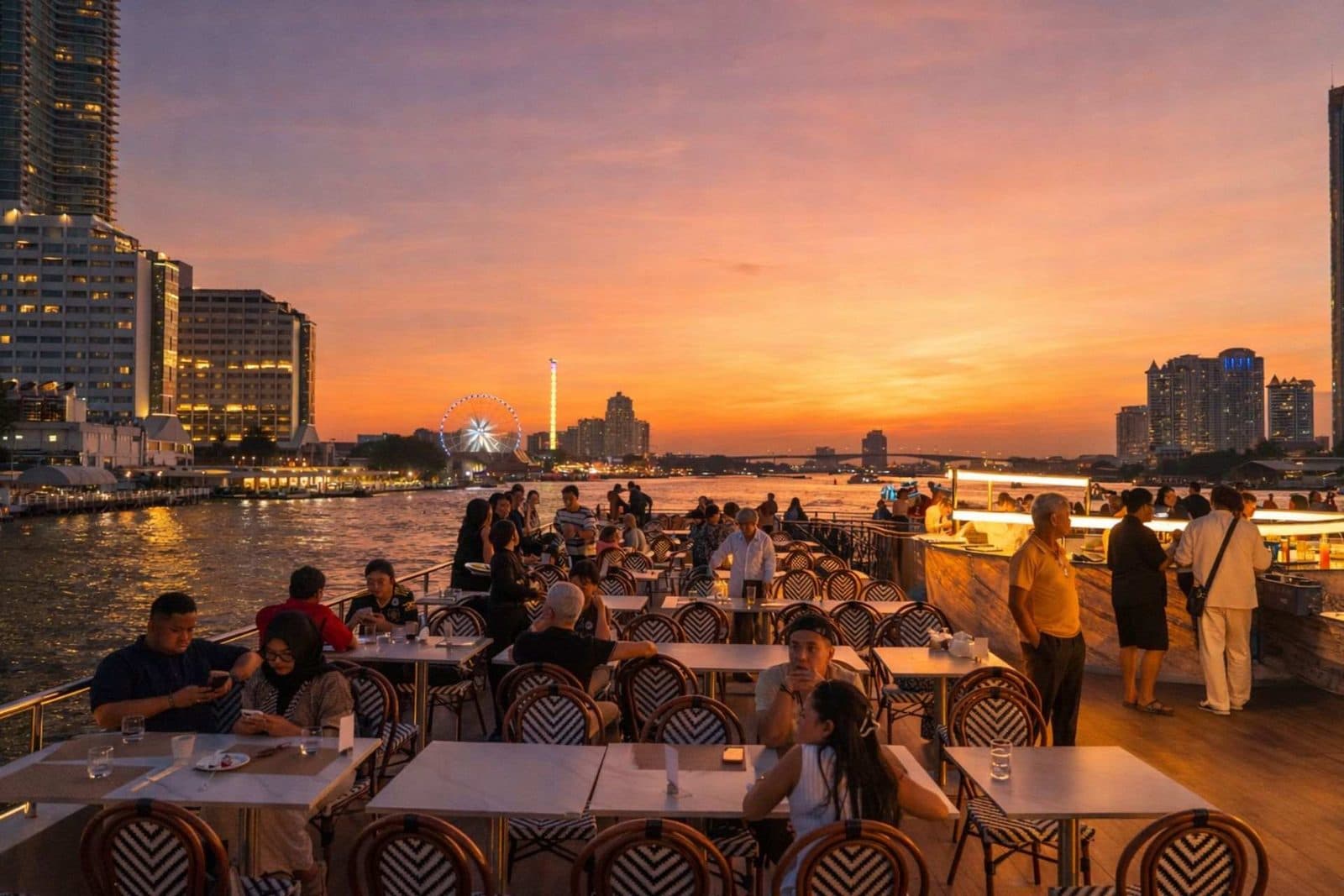
The river is where Bangkok makes sense. Temples, old warehouses, wooden houses and towers all line the same water. It is also the easiest way to move between the old town, the temples and Chinatown without sitting in traffic.
Do it yourself: the public river boats are simple, cheap and used by locals. Look for the flag colours on the boats and ask at the pier which one stops where you want to go. The cross-river ferries to Wat Arun are even easier.
When a tour helps: at the end of the day. The light on Wat Arun at sunset is one of the best views in the city. A sunset cruise on the Chao Phraya lets you sit back and watch it without fighting for a spot on a crowded public boat.
Not for you if you get seasick easily? The river is calm. Most people are fine.
Street food: eat everywhere, but eat smart
Street food is not a side activity in Bangkok. For many of our guests it is the highlight of the whole trip. Noodle soups, grilled meats, curries, mango sticky rice, fresh fruit: it is everywhere and it is good.
Our simple rules: eat where there is a queue of locals. Choose stalls that cook in front of you. Go slowly with spice on the first day. Carry small notes and coins.
DIY or guide? You can absolutely eat well on your own. The problem is knowing what to order: menus are often only in Thai, and the best dishes hide in places you would walk past. A guide is worth it if you want to taste a lot in one evening and understand what you are eating. Our street food tuk-tuk tour does that, and the tuk-tuk ride between stops is half the fun.
Not for you if you have serious food allergies and cannot explain them in Thai. In that case, a guide who can translate is not a luxury.
Chinatown and the old town by night
Bangkok changes after dark. The heat drops a little, the neon comes on along Yaowarat Road in Chinatown, and the streets fill with food carts and smoke from the grills. The old town around the temples is quieter, with lit-up monuments and empty squares.
Do it yourself: Chinatown is easy to reach by metro and fun to wander. Go hungry. Be ready for crowds on the main road, and step into the side alleys for a calmer feel.
When a guide helps: if you want to cover Chinatown, the old town and a few hidden corners in one evening. The distances are too long to walk comfortably, and a guide knows the route. Our Bangkok by night tuk-tuk tour links Chinatown and the old town.
If you take a tuk-tuk on your own, agree on the price before you get in. Always.
Markets: in the city and out of town
Bangkok has markets for everything: food, clothes, flowers, amulets, night markets with live music. Wandering a city market on your own is easy and very local. Bargain politely, smile, and walk away if the price feels wrong.
The two famous ones outside the city are a different story.
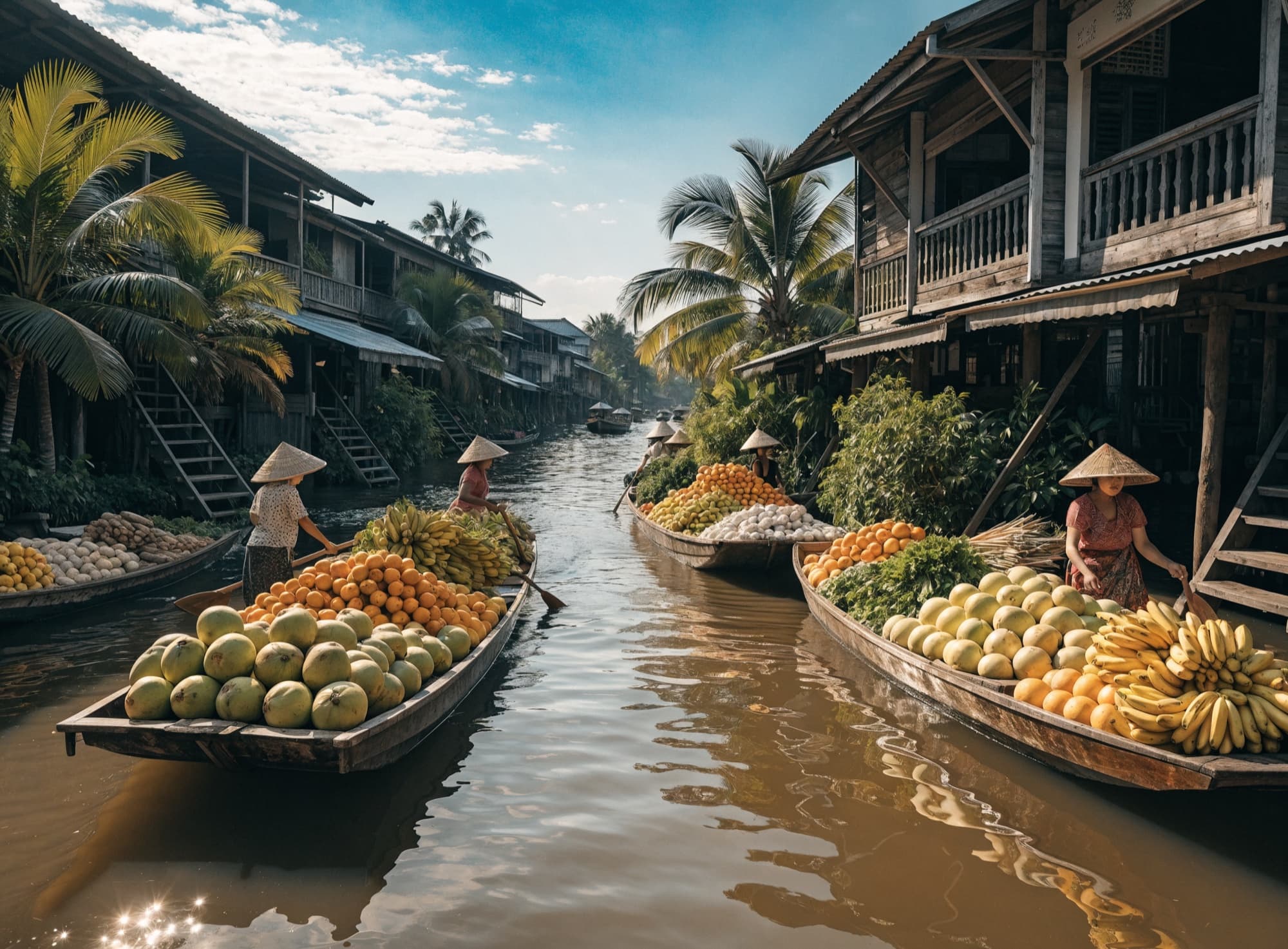
- The floating markets: boats loaded with fruit and noodles on narrow canals. They are photogenic, but honestly very touristy now. Go with low expectations about authenticity and high expectations for photos.
- The railway market: a market built on a working train line. When the train comes, the stalls fold their awnings and the train rolls through right past the goods. It is strange and memorable. Check when the train passes before you go, because the whole show depends on it.
DIY or guide? Both are outside Bangkok and awkward to combine by public transport. This is where organised transport saves your day. Our floating and railway markets tour combines the two.

Day trips: Ayutthaya or Kanchanaburi
If you have time for one trip out of the city, choose based on what moves you.
Ayutthaya was the old capital of the kingdom. Today it is a field of brick ruins, headless Buddhas and old temples spread over a wide area. It is quieter than Bangkok and very atmospheric. The site is large, so you need transport between temples. A guide brings the history alive; without one, many ruins look alike. Bring a hat, water and sun cream: there is little shade. Dress respectfully if you visit active temples.
Kanchanaburi is the home of the bridge on the River Kwai and the wartime railway built by prisoners of war. It is a moving, serious day, with green countryside around it. It is a long day on the road, so it is not ideal if you hate time in a vehicle. For most travellers, an organised day is the realistic option.
Not sure? History and temples: Ayutthaya. War history and nature: Kanchanaburi. Very short stay: skip both and enjoy the city.
What we think is overrated (and who it is still for)
Being honest is part of the job. Here is what guests often tell us they could have skipped.
- Khao San Road: loud, crowded, built for backpacker nights out. Fun if that is your scene. Not for families or anyone looking for real Bangkok.
- Trying to see everything in one day: the Grand Palace, Wat Pho, Wat Arun, a market and a rooftop in the same day is a recipe for heat exhaustion. Split it.
- Shopping malls as an activity: the air conditioning is welcome on a hot afternoon. As a sight, they are like malls anywhere.
- Tuk-tuk drivers offering a cheap city tour: these often end at gem or tailor shops. If the price sounds too good, it is.
None of this is bad. It just should not take the place of the river, the temples or a night eating in Chinatown.
Planning your days: when to go and how to get around
Season: the cool, dry months, roughly November to February, are the most pleasant for walking. March to May is very hot: plan temples early and rest in the afternoon. Roughly June to October is the rainy season, usually with short afternoon storms rather than all-day rain.
Getting around: the BTS Skytrain and MRT metro beat traffic every time. River boats connect the old town and Chinatown. Metered taxis are fine: ask for the meter. Tuk-tuks are for fun, not efficiency, and you agree on the price first.
Arriving and leaving: Suvarnabhumi handles most international flights, Don Mueang mostly low-cost ones. Check which one you use before booking onward travel to the islands.
Want it handled for you? A private day with a guide is the easiest way to see the highlights without stress. The Classic Bangkok private tour covers the big names. If crowds drain you, the Quiet Bangkok private tour takes a slower, calmer route. French speakers can also read our French-language Bangkok guide.