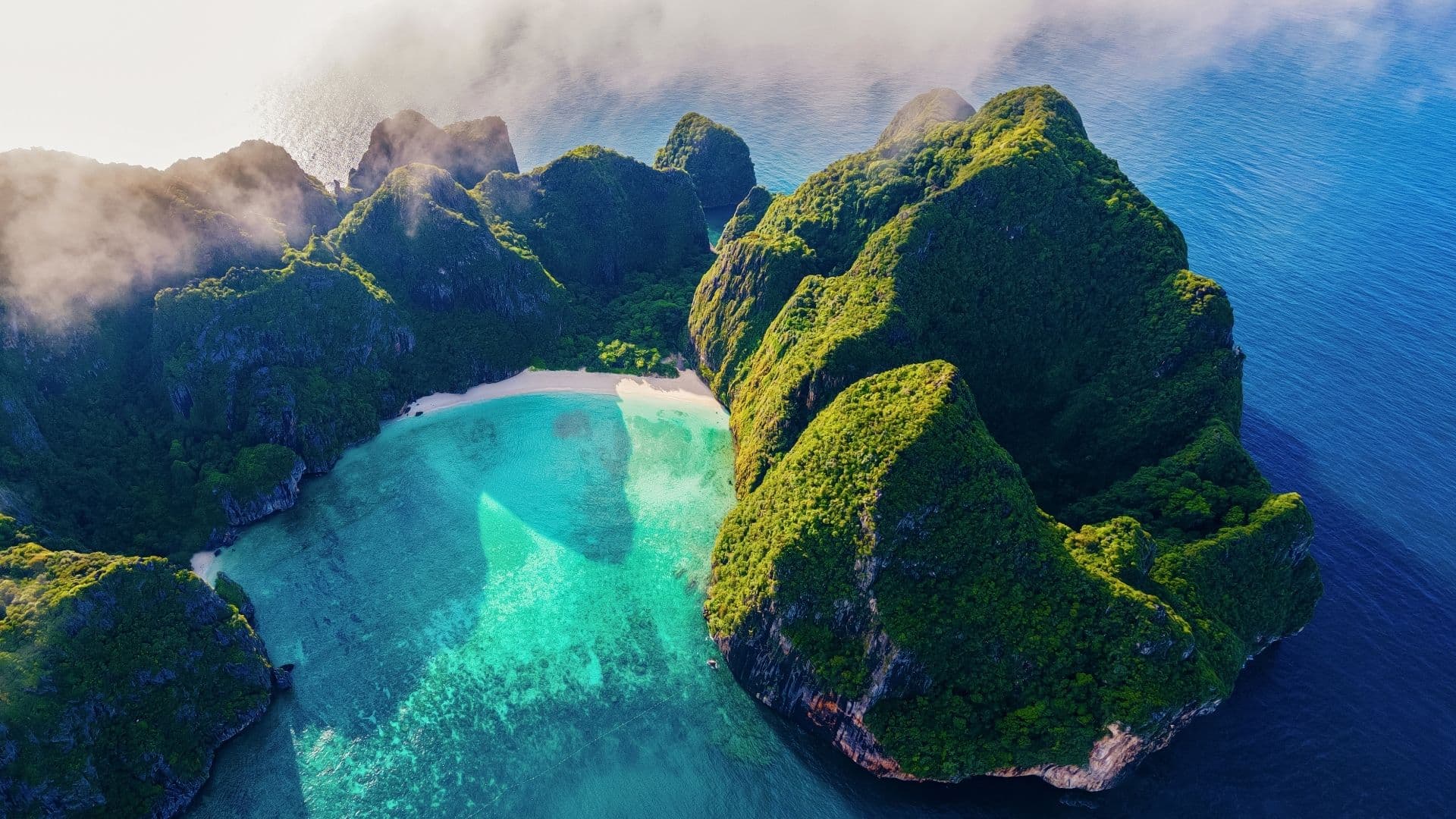




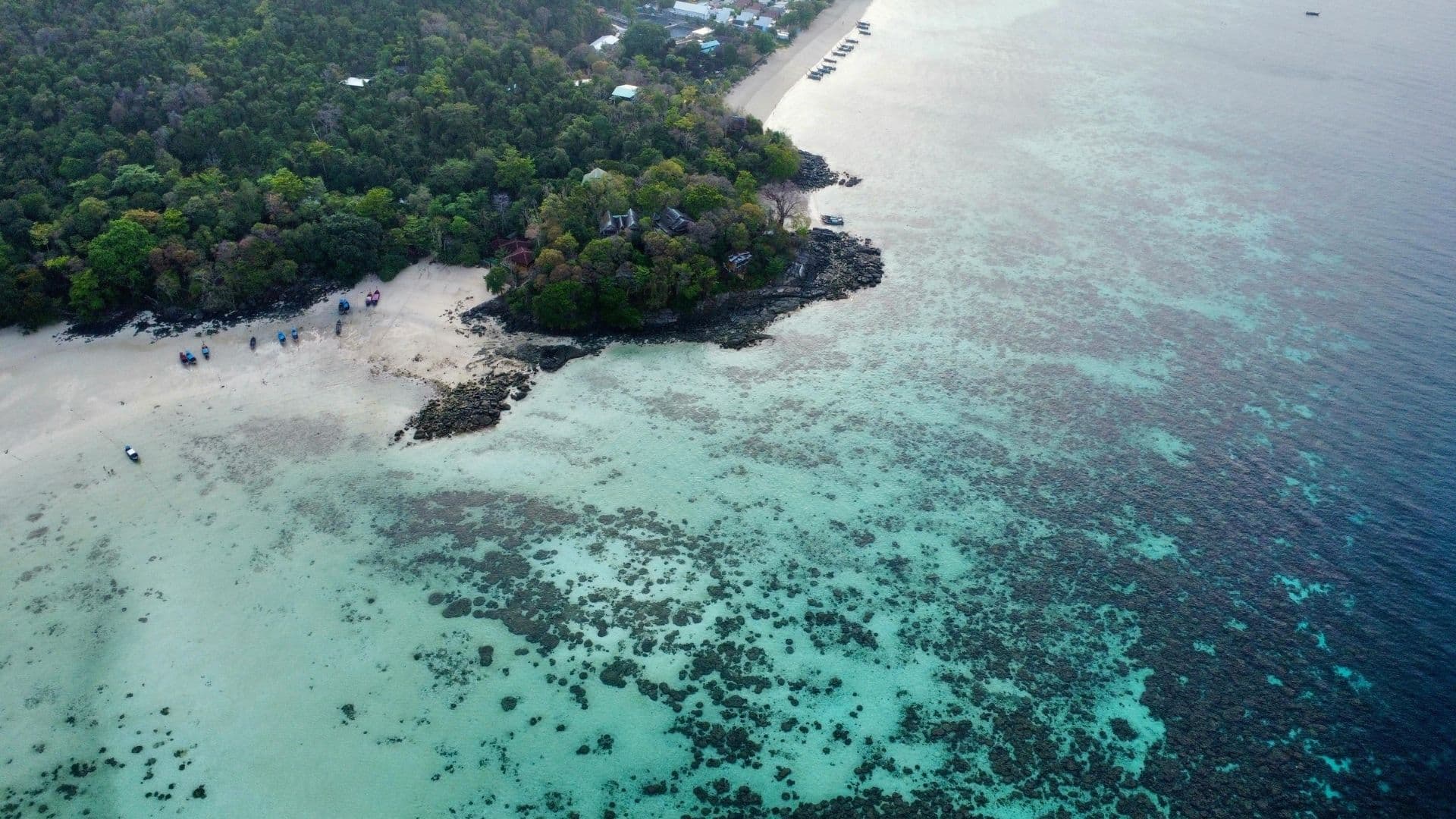

Krabi has a lot of beaches and a lot of photos of them. The photos don't show the long-tail engines, the tide that pulls the sea far out, or the crowd that lands at the same moment you do. This guide does.
Our team lives on Koh Phi Phi, across the water. We don't live in Krabi: we plan trips there and work with local guides and boat crews we book directly. This ranking comes from what our guests tell us when they come back, and from our own days on these beaches.


The best beaches in Krabi: our ranking
Here is the short version, best first:
- Phra Nang Cave Beach (Railay): the most beautiful beach in Krabi. Cliffs, soft sand, good swimming.
- Railay West (Railay): wide, calm, the best sunset beach on the mainland side.
- Koh Poda (island): the easiest island beach, white sand and clear water.
- Koh Tup sandbar (island): unforgettable at low tide, ordinary at high tide.
- Chicken Island (island): better for snorkeling and the view than for lying on the sand.
- Nopparat Thara (mainland): long, quiet, local. Not a swimming beach at low tide.
- Ao Nang (mainland): a convenient base, not a destination beach.
- Railay East (Railay): a mangrove shore. Walk through it, don't swim there.
The pattern is simple. The best beaches are the ones you can only reach by boat. Plan at least one Railay day and one island day.

Railay: Phra Nang Cave Beach
Railay can only be reached by boat, a long-tail from Ao Nang or Krabi Town. There is no road. That one fact keeps the peninsula calmer than the mainland, even on busy days.
Phra Nang Cave Beach sits at the southern tip, under towering limestone walls. The sand is soft, the water is clear on a good day and the swimming is easy. At one end is the cave shrine, filled with wooden offerings left by local fishermen. Please look, don't touch.
The trade-off: it is also a stop on the 4 Islands tour, so boats arrive through the late morning and midday. Come early or late in the day if you want it quieter. If you sleep on Railay, you get those hours almost to yourself.
Good for: scenery, swimming, couples, families with kids who can walk on sand. Not for: anyone hoping for an empty beach at midday.

Railay West and Railay East
Railay West is the classic postcard: a wide crescent of sand framed by cliffs. The water is calm in high season and the sunset is the best on this side of Krabi. Long-tails drop passengers at one end, so there is engine noise and traffic there. Walk towards the other end for quieter water.
Railay East is a different place. It is a mangrove shoreline where the sea goes far out at low tide and leaves mud. It is where some boats land and where the walking path to Phra Nang starts. Don't plan to swim here.
If you are staying on Railay, the peninsula is small enough to walk between all three beaches. Our Railay guide covers climbing, the viewpoint and where to base yourself by area.
Ao Nang beach
Ao Nang is the main beach base in Krabi, and for good reason: it has the boats, the shops and the easy logistics. As a beach, it is average. The view of the karst cliffs is lovely. The water is often less clear than on the islands.
The long-tail line sits right on the sand, so expect engine noise and boats coming in and out through the day. Swimming is possible, but keep well away from where the boats run.
Good for: a sunset walk, a quick swim after a tour, easy access with kids. Not for: a full beach day. Use Ao Nang as your launch pad, not your destination.
Nopparat Thara
Nopparat Thara is next door to Ao Nang and much quieter. It is a long, open beach lined with trees, popular with Thai families at the weekend. It feels local and relaxed.
The catch is the tide. At low tide the sea retreats a long way and the water is very shallow. Kids enjoy the pools and the sandbanks. Swimmers will be disappointed.
Good for: a walk, a picnic, a calm late afternoon away from the Ao Nang crowds. Not for: a proper swim at low tide. Check the tide before you go.
Koh Poda
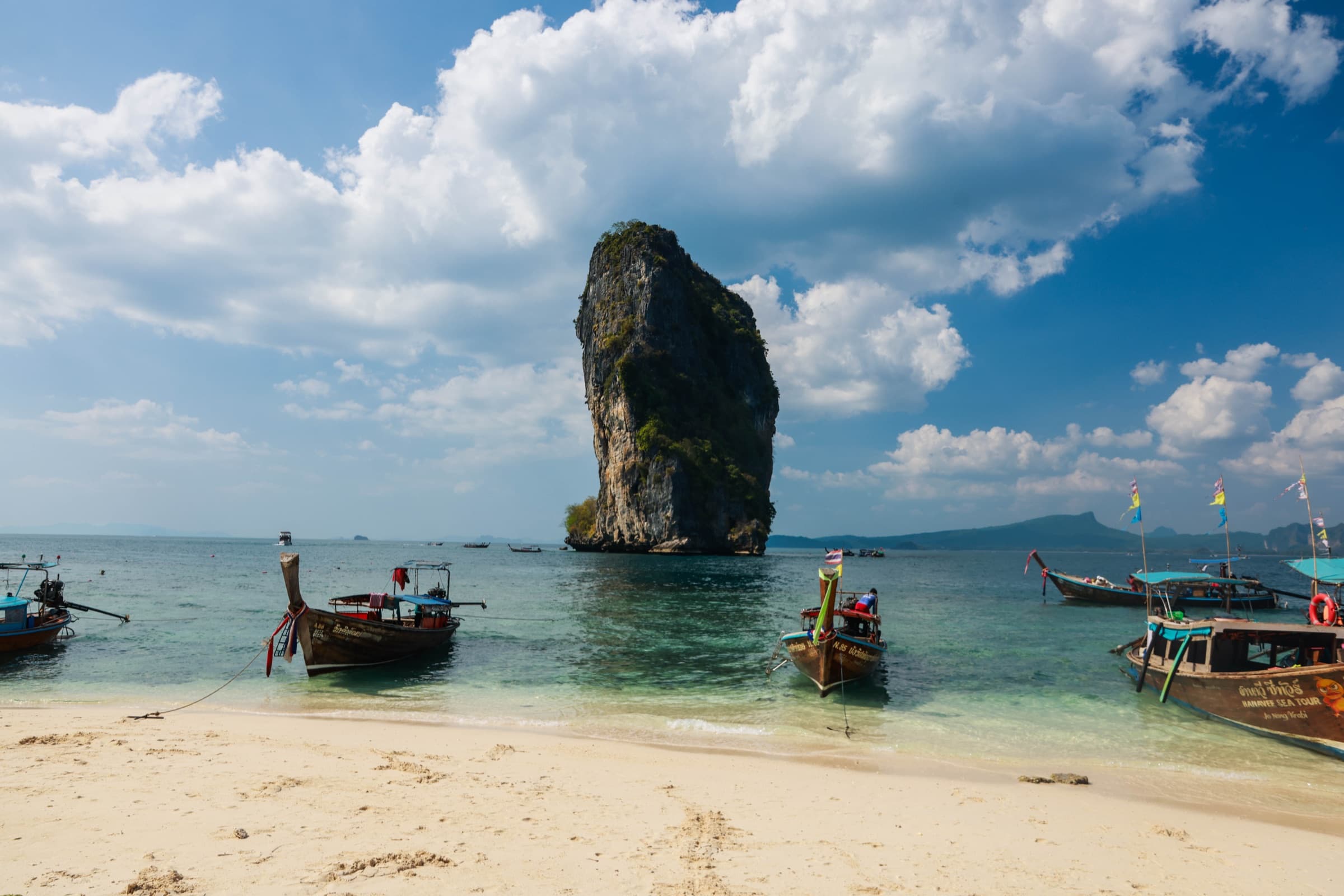
Koh Poda is the island beach we suggest to most first-timers. The sand is white, the water is clear in high season and the tall rock pinnacle just offshore makes the view. It is a short boat ride from Ao Nang.
It has a good shallow area for swimming, which makes it the best island stop for families. Shade is limited, so bring a hat and reef-safe sun cream.
The trade-off is crowds. Koh Poda is on almost every island-hopping route, and the main beach fills up at the peak of the day. Walk along the shore and you usually find more space.

Chicken Island and Koh Tup
Chicken Island (Koh Kai) is named for the rock that looks like a chicken's head and neck. Most boats stop off its side for snorkeling rather than on a beach. It is the better snorkeling stop of the group, but don't expect a big lounging beach.
Koh Tup is famous for its sandbar, which appears at low tide and lets you walk across the shallows between small islands. It is a beautiful, slightly surreal walk. At high tide the sandbar disappears and the stop is far less special.
That is why tour timing matters. Tide timing matters here, so ask your crew how the day is planned around it. Read our 4 Islands tour guide for how the day usually flows between Phra Nang, Tup, Chicken Island and Poda.
Which Krabi beach for which traveller
- Couples and photographers: Phra Nang Cave Beach early, Railay West for sunset.
- Families with young kids: Koh Poda for calm shallow water, Nopparat Thara for low-tide pools, Ao Nang for easy logistics.
- Snorkelers: Chicken Island first, then a day to the Hong Islands. See our Hong Islands guide.
- People who hate crowds: stay a night on Railay, or book a private long-tail and choose your own timing.
- People who want one easy day: the 4 Islands tour covers Phra Nang, Tup, Chicken Island and Poda in one go.
If you want lagoons and quieter water, the Hong Islands and Railay day is our pick. You can browse everything else on our Krabi tours page.
Tide, season and crowds: what to plan around
Tide: it changes Krabi beaches more than anything else. Low tide is great for the Koh Tup sandbar and bad for swimming at Nopparat Thara and Railay East. Check a tide chart the night before.
Season: high season runs November to April, with calm sea and clear water. February to April is the driest. From May to October the southwest monsoon brings short squalls and some rough days, when boat tours can be cancelled. Sea water stays 27 to 30 °C all year.
Crowds: the island beaches are busiest from late morning to early afternoon, when most tour boats overlap. Early starts and sunset trips are calmer.
Noise: long-tails are part of the scenery. On Ao Nang, Railay West and the islands, the landing zones are loud. Walk away from them and it gets quieter fast.