




Railay is where a lot of people touch rock for the first time, and for good reason. The cliffs rise straight out of the sand, the walls have big, friendly holds, and local guides have taught nervous first-timers here for a long time. You do not need to be sporty or brave. You need to listen, breathe and trust the rope.

Our team lives on Koh Phi Phi, not in Krabi. We plan Krabi trips for our guests and work with local climbing guides we book directly, and we hear the same questions every week: Am I fit enough? Will I be scared? What do I wear? This guide answers them honestly.
Can a beginner really climb at Railay?
Yes. A beginner session at Railay is top-rope climbing: the rope runs from your harness up to a fixed anchor at the top of the route and back down to your guide. If you slip, the rope catches you after a short drop. You hang on the rope, rest, and try again.

The guide chooses easy routes with large holds, ties you in, checks your harness and holds your rope from the ground the whole time. You never have to rig anything yourself.
The first climb is usually slow and a bit wobbly. By the second or third route, most people start to enjoy it. If you want to try it, our Railay rock climbing session is the simple way in.

What a beginner session feels like
A beginner session starts on the ground. Your guide gets you set up, then shows you the basic knot and the commands climbers shout to each other. It sounds technical. It takes a few minutes to learn. The tour page shows what is included.
Then you climb. The first metres feel easy. Higher up, your brain notices the height and your legs may shake a little. That is normal and it passes once you trust the rope. Coming down is the fun part: you lean back, walk your feet down the wall and the guide lowers you.
Between climbs you rest in the shade, drink water and watch others. You climb several routes, each a little different. Most people finish tired, sweaty and grinning, with sore forearms the next day.

Fitness: how strong do you need to be?
Less than you think. Good climbing is about standing on your feet and pushing with your legs. Beginners who pull hard with their arms get tired fast. Your guide will remind you again and again: use your feet.
What helps:
- Being able to climb a ladder or a steep staircase without trouble.
- Basic grip strength, like carrying shopping bags.
- Patience and a calm head more than muscle.
Who it is NOT for: people with recent shoulder, wrist, knee or back injuries, anyone pregnant, and people with a strong fear of heights who really do not want to face it. If you have a medical condition, ask your doctor first and tell your guide before you start. Children can often climb too, but check the age rules on the tour page.
What to wear and what to bring
Wear sports clothes that stretch. Shorts or light leggings and a breathable top work best. Skip jeans and anything tight at the knees. Long leggings help protect your legs from the rough limestone.
Bring:
- Plenty of water, more than you think. It is hot and humid.
- Sunscreen and mosquito repellent. The walls sit at the edge of the jungle.
- Sandals or flip-flops for the walk along the beach and back.
- A small towel and a change of top.
- A hair tie if you have long hair.
Leave rings, big earrings and watches in your bag. Climbing shoes feel tight on purpose: a snug shoe helps you stand on small holds. Tell the guide if they hurt badly and ask for another size.
Safety on Railay limestone
Climbing with a proper guide is a controlled activity, but it is still a sport with real risks. Your best protection is a guide who checks everything twice and a climber who listens.
Simple rules we give our guests:
- Always wear the helmet, even when you are standing at the base. Small stones can fall.
- Let the guide check your knot and harness before every climb, not only the first one.
- Do not let go of the wall or sit back on the rope until the guide says so.
- Watch your hands on the rock: limestone can be sharp in places.
In the hot hours, dehydration and dizziness are a real risk. Drink, rest in the shade and say so if you feel unwell. A good guide would rather you stop early than push on.

Best season to climb at Railay
High season runs from November to April. The sea is calm, the boats to Railay run easily and the rock stays dry. February to April is the driest stretch, but it is also hot, so mornings and late afternoons in the shade are the most comfortable times on the wall.
From May to October the southwest monsoon arrives. Rain usually comes as short squalls rather than all-day rain, and some walls are sheltered by overhangs. The real issue is wet, slippery rock and rough sea days when the boat ride is less pleasant.
If you travel in the green season, keep your plans flexible and leave a spare day in your Krabi stay. Your guide decides on the day whether conditions are safe.
Getting to Railay for your climb
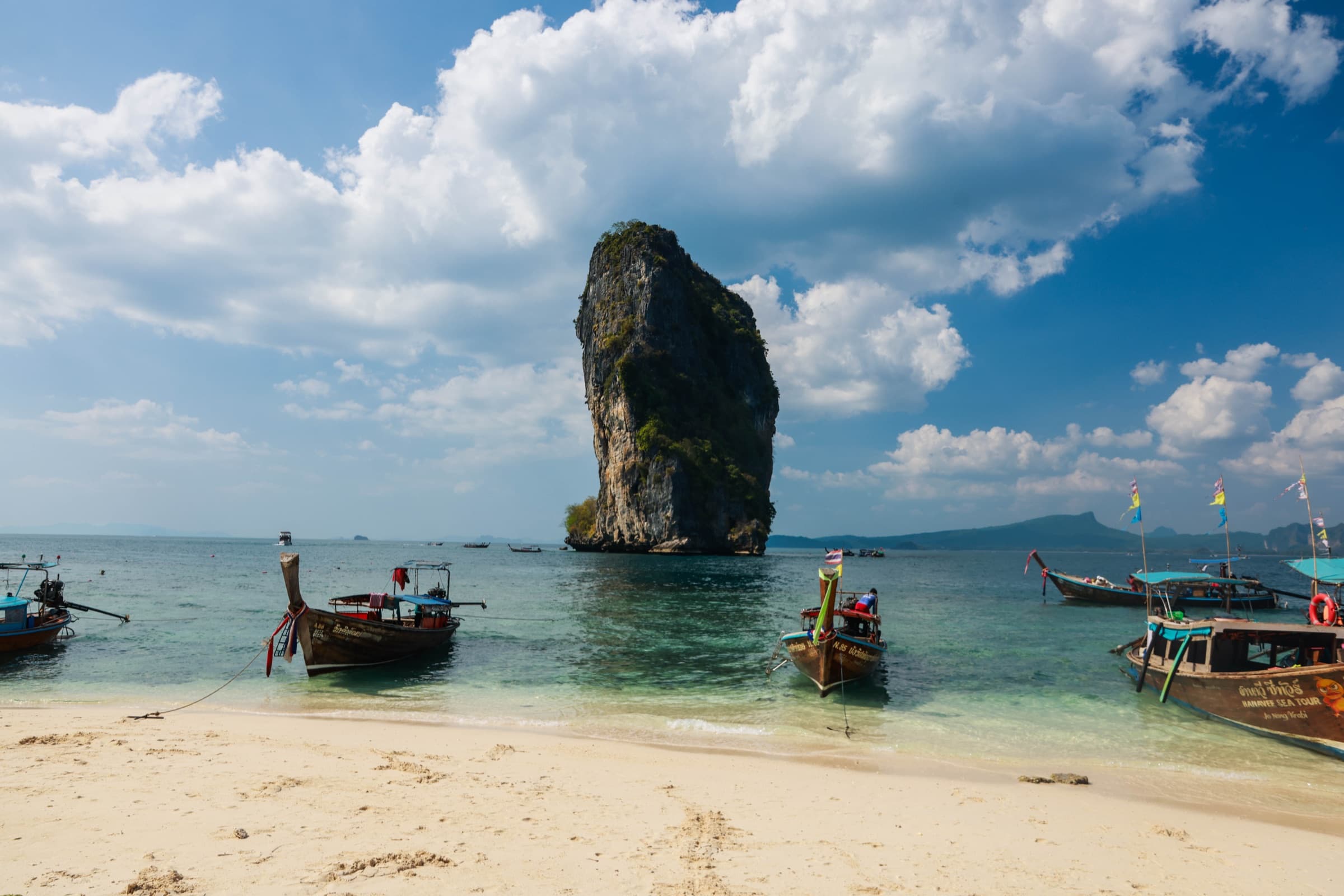
Railay can only be reached by boat. There is no road. You take a long-tail from Ao Nang or Krabi Town, and the ride itself is part of the fun, with the cliffs growing bigger as you approach.
If you want to climb early, think about where you sleep. Staying on Railay puts you right next to the walls. Staying in Ao Nang gives you more choice and easier logistics for the rest of your trip. Our Ao Nang or Railay comparison helps you decide.
On a rough monsoon day the long-tail crossing can be bumpy and wet. Pack your phone and passport in a dry bag.
Rope climbing or deep water soloing?
Deep water soloing means climbing sea cliffs without a rope and falling into the water when you let go. It is usually done from a boat. It looks wild in videos and it is a great day out, but it is a different experience.
Rope climbing suits most first-timers better. You learn how to move on rock, you can rest on the rope, and there is no swimming involved. Deep water soloing needs you to be a confident swimmer, comfortable jumping and falling into the sea from a height, and the trip depends on the tide and the sea state, so it is more likely to be called off in the monsoon.
Our honest advice: start on a rope. If you love it, try deep water soloing later in the trip with a guide who knows the right spots. Non-swimmers should stick to rope climbing, full stop.
Taster session or a proper course?
If you just want to try it once on holiday, a beginner session is enough. You climb, you laugh, you take photos, you go to the beach.
If you already climb indoors at home or you want to learn to climb outdoors on your own one day, a course goes deeper into climbing on your own. Look at our Railay climbing course: the tour page shows what it covers. Our tour cards show the live details and price.
Either way, climbing fits nicely into a few days around Railay. See our Railay guide for the beaches and viewpoints, and our Krabi excursions page for the rest of your days. For a softer day after climbing, the Railay sunset long-tail is an easy way to see the cliffs from the water.


