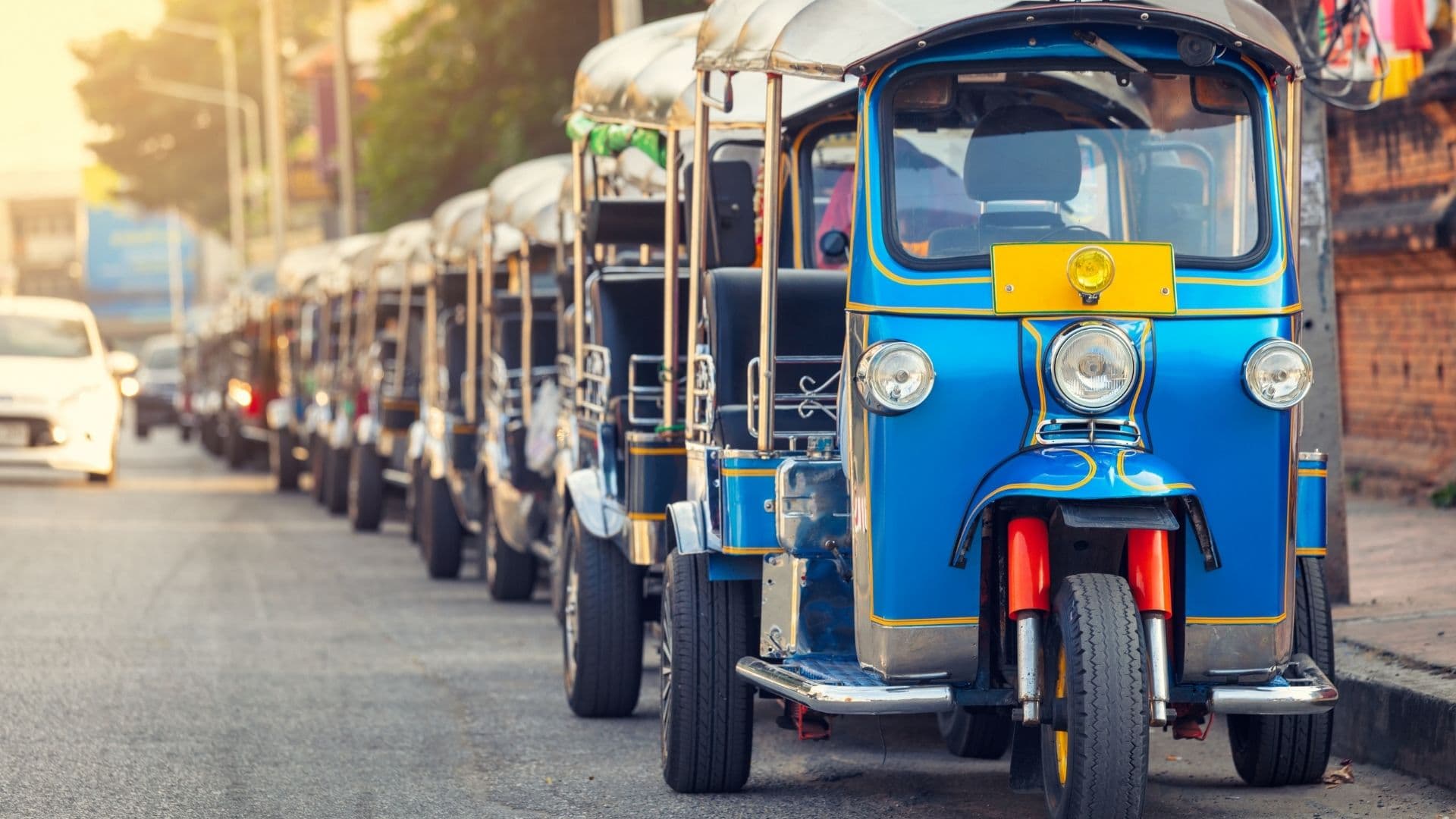
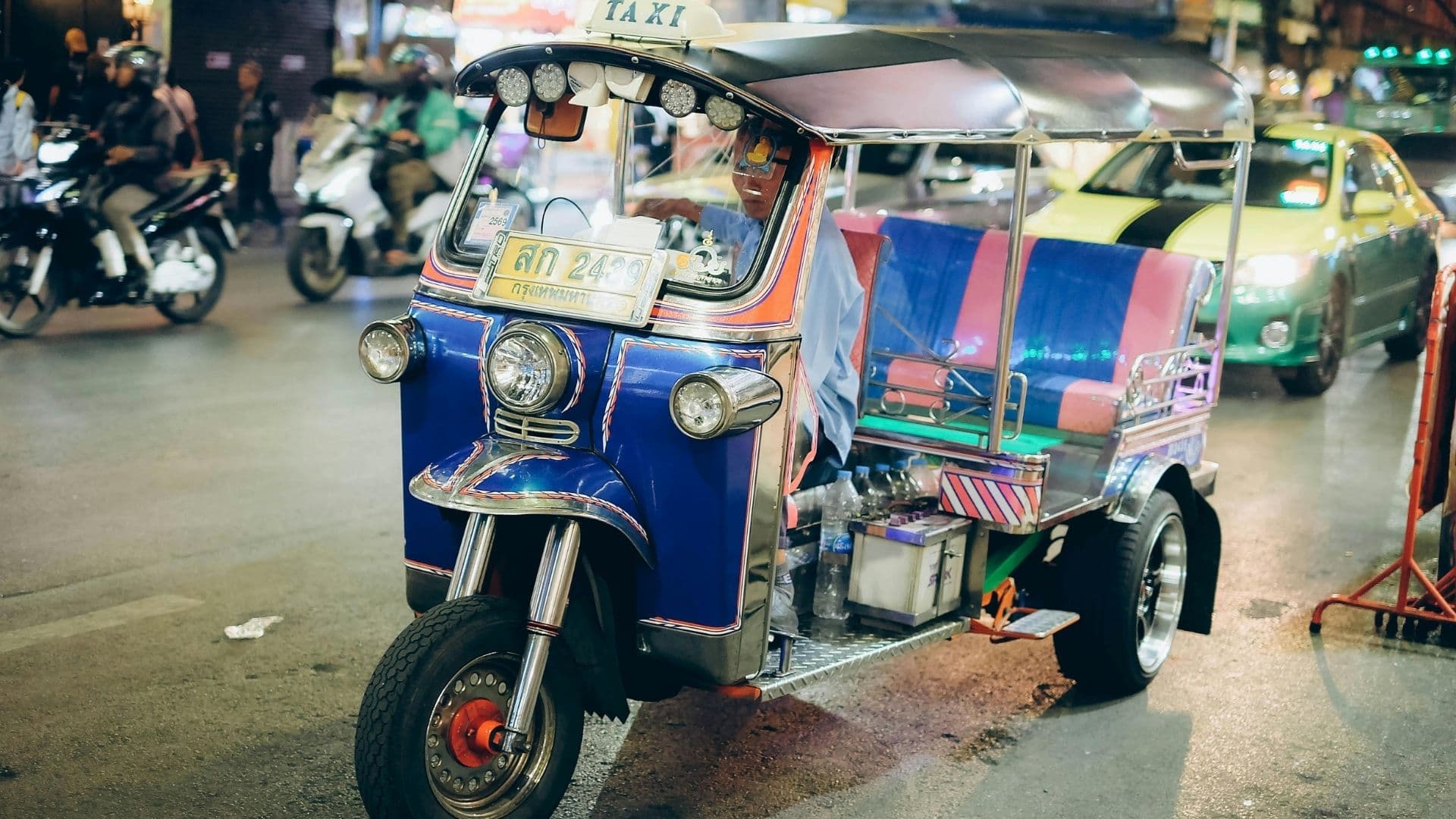
The tuk-tuk is the sound of Bangkok. That buzzing engine, the open sides, the driver weaving through traffic with a grin. Almost every traveller we send to Bangkok asks us the same thing: should I ride one, and will I get ripped off?
Our team lives on Koh Phi Phi, not in Bangkok. We plan trips there for our guests and work with local guides we book directly, and we hear the stories when people come back down to the islands. This guide is what we tell them before they go: when a tuk-tuk is a joy, when it is a mistake, and how to stay in control of the ride.
Should you take a tuk-tuk in Bangkok? Our short answer
Yes, once, for the experience. Not as your daily way to get around.
A tuk-tuk is a ride, not a commute. It is noisy, hot, open to the traffic fumes and slower than the train when the roads are jammed. It is also great fun on a short hop through the old town or on a warm evening when the streets light up.
The one rule that matters: agree on the price before you get in. No agreed price, no ride. Everything else in this guide builds on that.
When a tuk-tuk is genuinely fun
We recommend a tuk-tuk when the ride itself is the point. A few moments where it shines:
- Short hops in the old town, where the BTS and MRT do not reach every corner and the streets are tight.
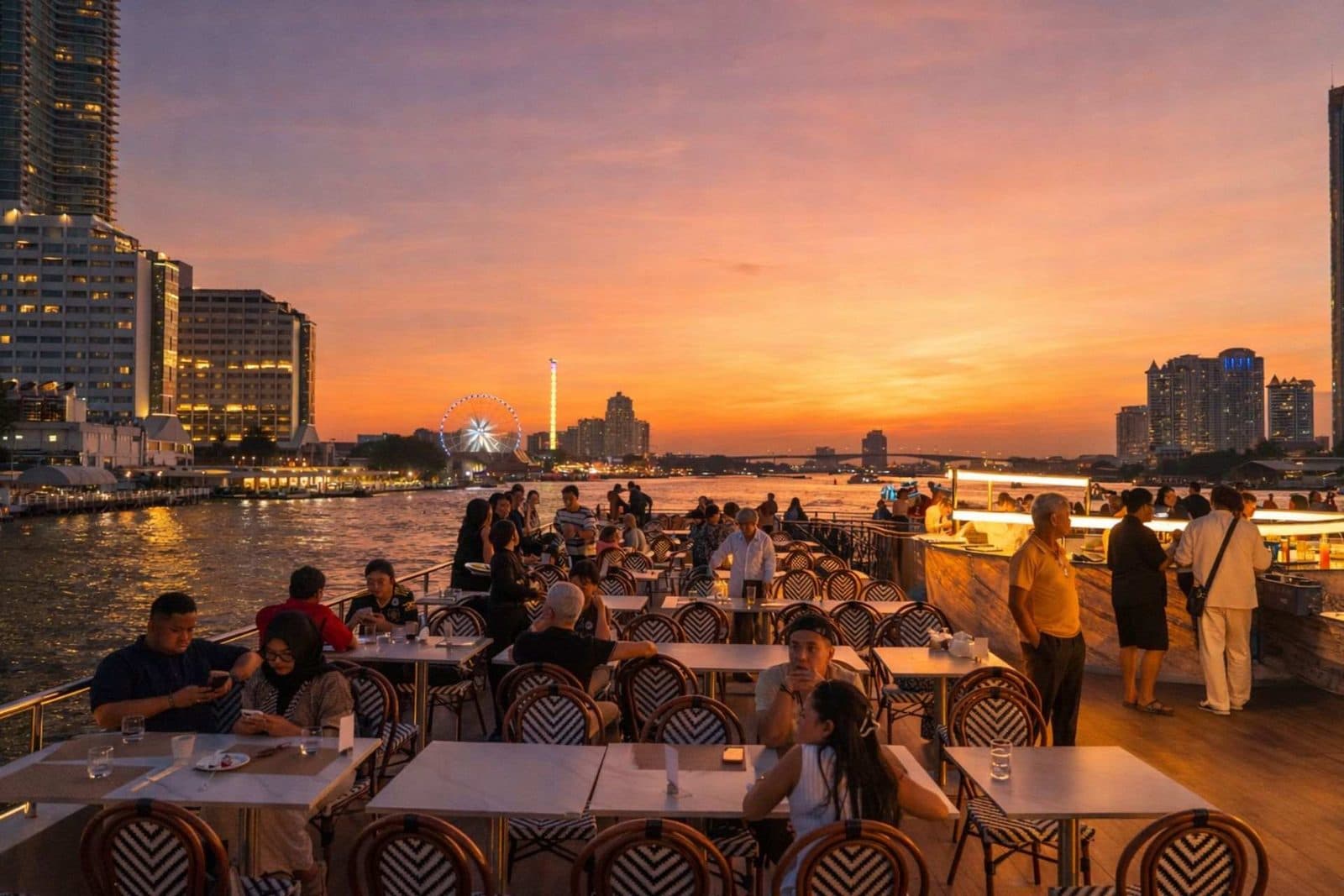
- Evenings, when the heat drops and the city glows. The open sides feel like a gift after a long day.
- Chinatown and the riverside areas, where you want to see the street, not a tunnel wall.
- When you are not in a hurry. If you have time and a sense of humour, the traffic becomes part of the show.
If you are planning your evenings, our guide to Bangkok at night pairs well with a tuk-tuk ride.
When a metered taxi, BTS, MRT or river boat is smarter
Most of the time, one of these beats a tuk-tuk. Here is how we think about it:
- BTS Skytrain: the best way to cross the modern centre. Air-conditioned, above the traffic, clear stations. Our first choice for shopping areas and business districts.
- MRT metro: same logic, underground. Great for linking areas the BTS misses.
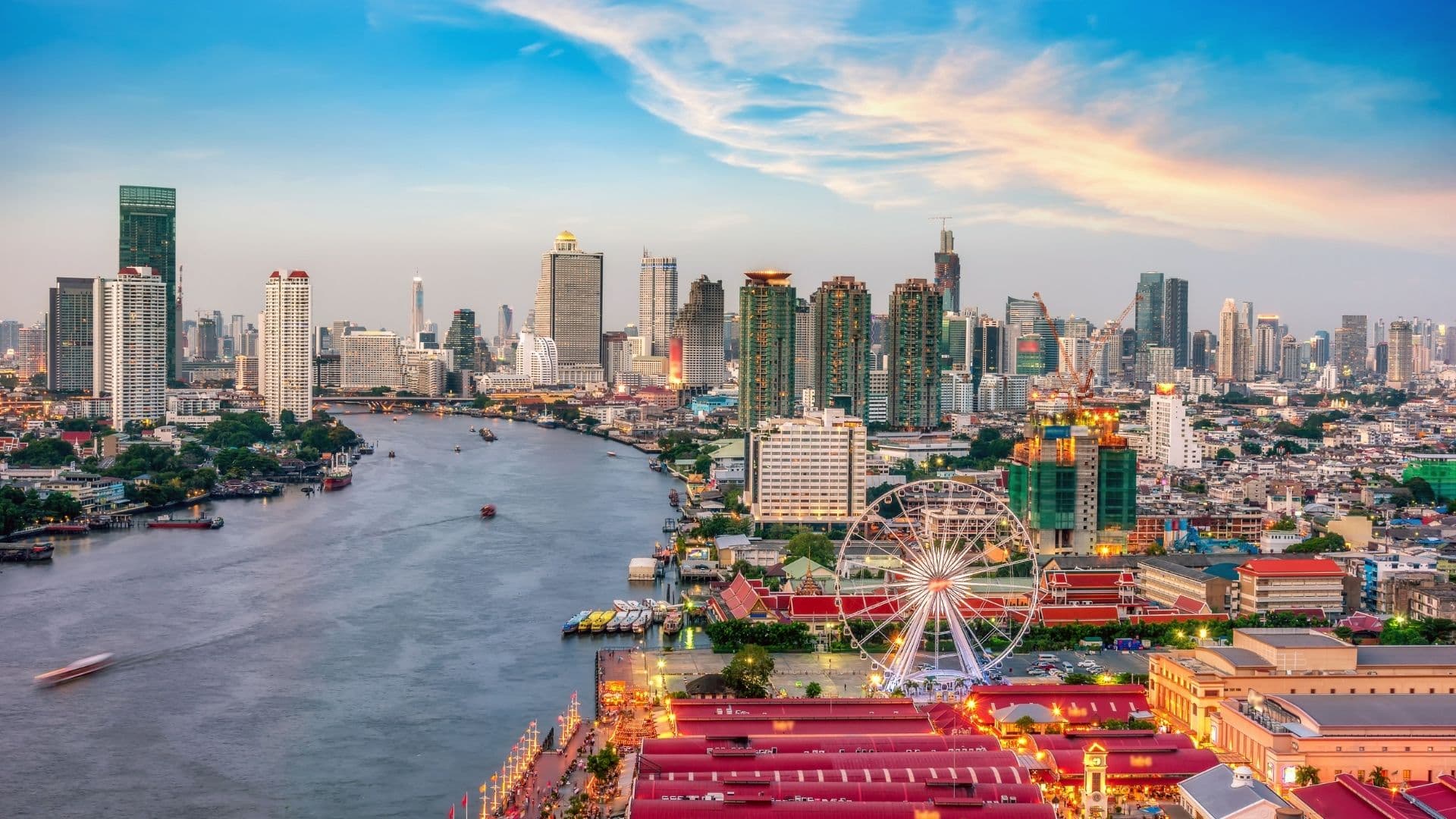
- Chao Phraya river boats: the smartest way to reach the riverside temples. You skip the roads entirely and the views are free. Our Chao Phraya river guide explains the boats and piers.
- Metered taxi: best for longer distances, luggage, families, rain, or late nights. Ask for the meter before you set off. If the driver refuses, step out and take the next one.
A tuk-tuk is the wrong choice for airport runs, long cross-city trips and anything with a deadline. For arrivals, read our airport to city centre guide instead.

How to agree the price before you get in
Tuk-tuks have no meter. The price is whatever you both say yes to, before the wheels move. We will not quote fares here: they change and they depend on the distance, the hour and the driver. What we can give you is the method.
- Know your destination. Have the name written down or pinned on your phone map. Show it.
- Ask the price first. Say where you want to go and ask how much, standing on the pavement.
- Check what it covers. One way, the whole group, no stops. Say clearly: no shopping, no stops.
- Compare. If it feels high, smile and walk to the next driver. There is almost always another one nearby.
- Carry small notes. Paying exactly avoids the classic "no change" moment at the end.
If the driver says the price is "up to you" or refuses to name one, that is your sign to walk away. A vague price at the start becomes an argument at the end.
The detour trick: "the Grand Palace is closed today"
This is the classic Bangkok scam, and our guests still meet it. A friendly stranger, often well dressed and speaking good English, approaches you near a big sight. He tells you the Grand Palace or a famous temple is closed today, for a ceremony or a holiday.
Then comes the helpful suggestion: a tuk-tuk waiting nearby will take you to another temple, a lucky Buddha, a special sale. The ride is surprisingly cheap. The catch is the stops along the way, usually shops where the driver earns a commission.
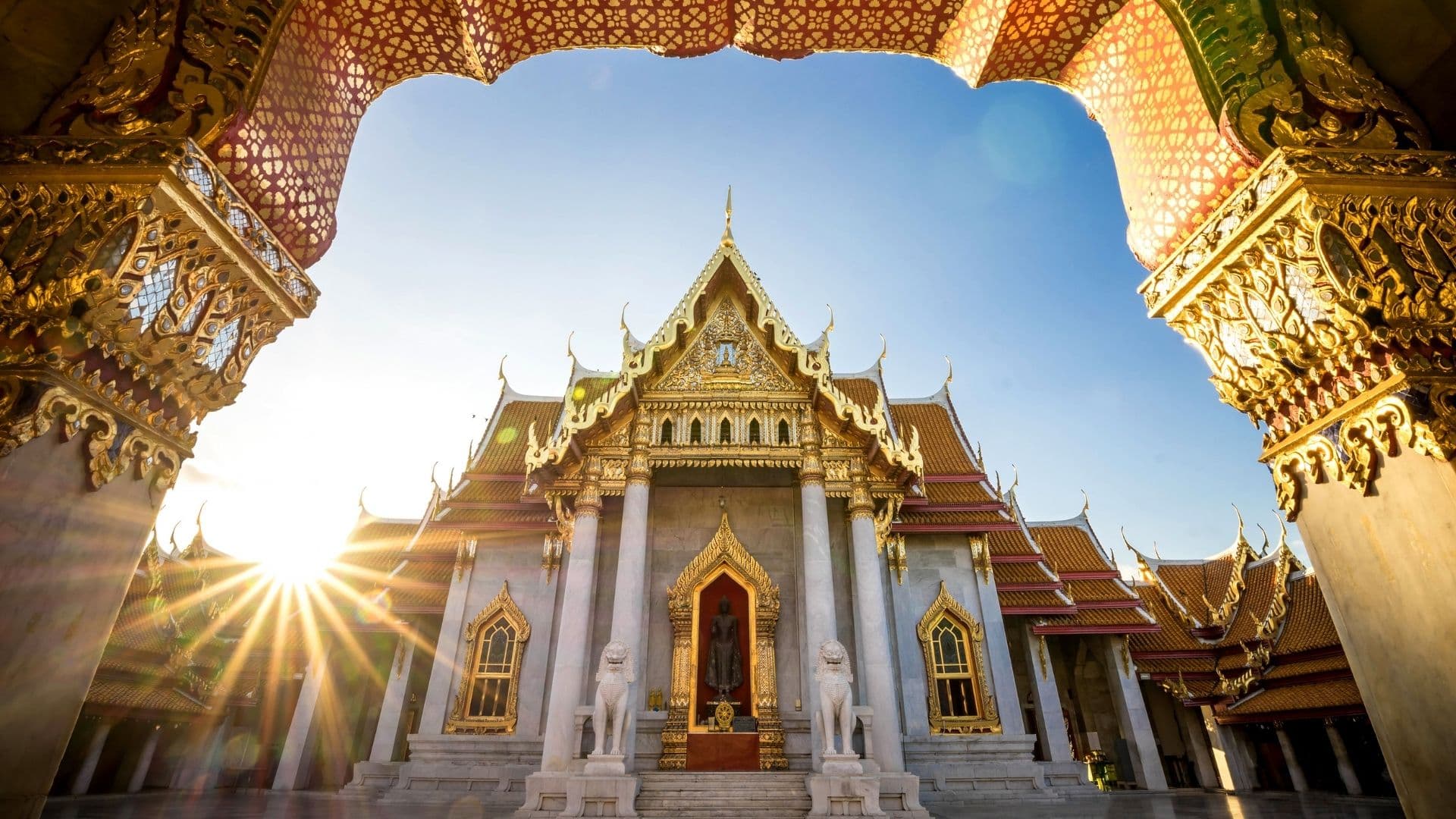
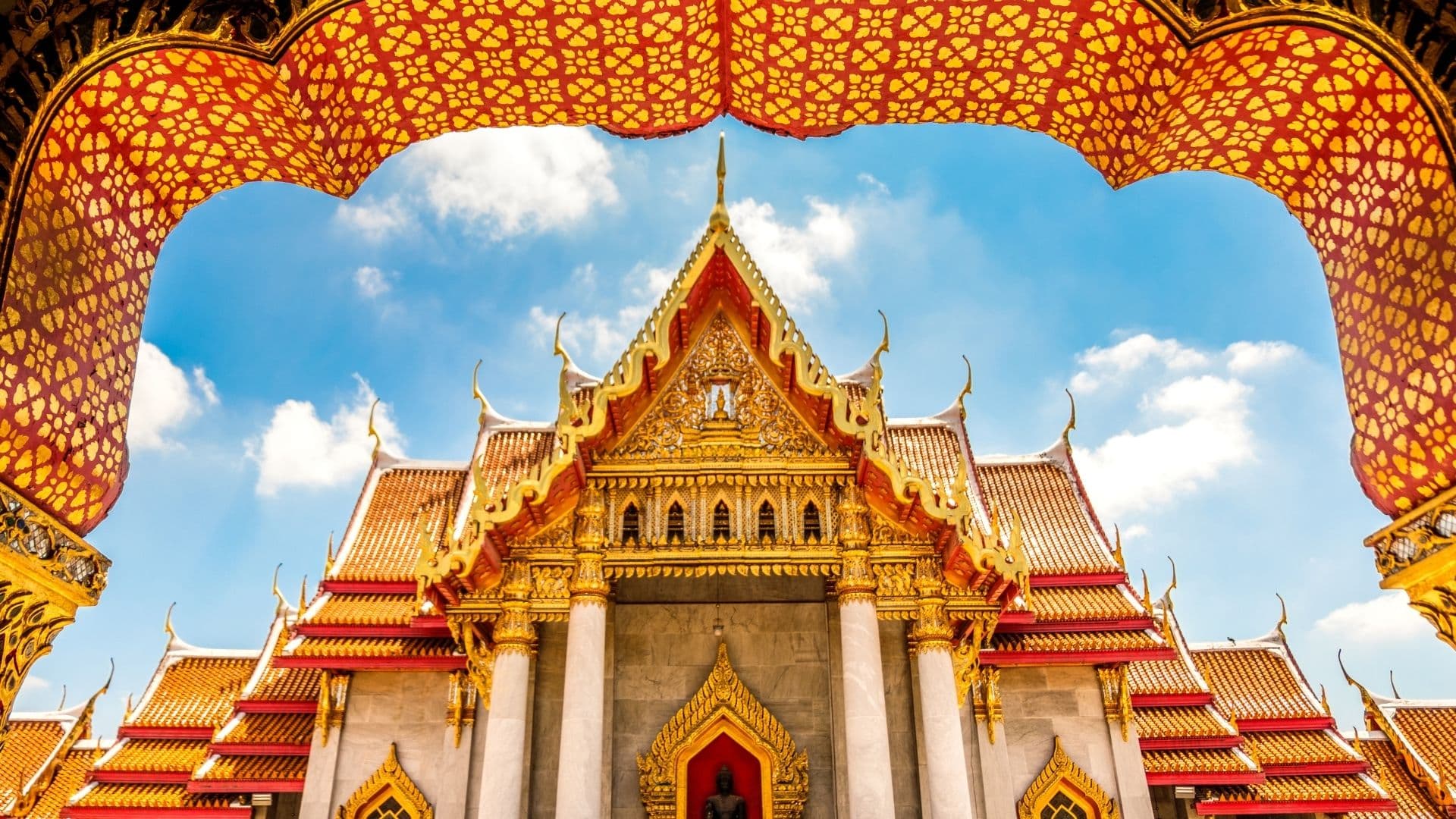
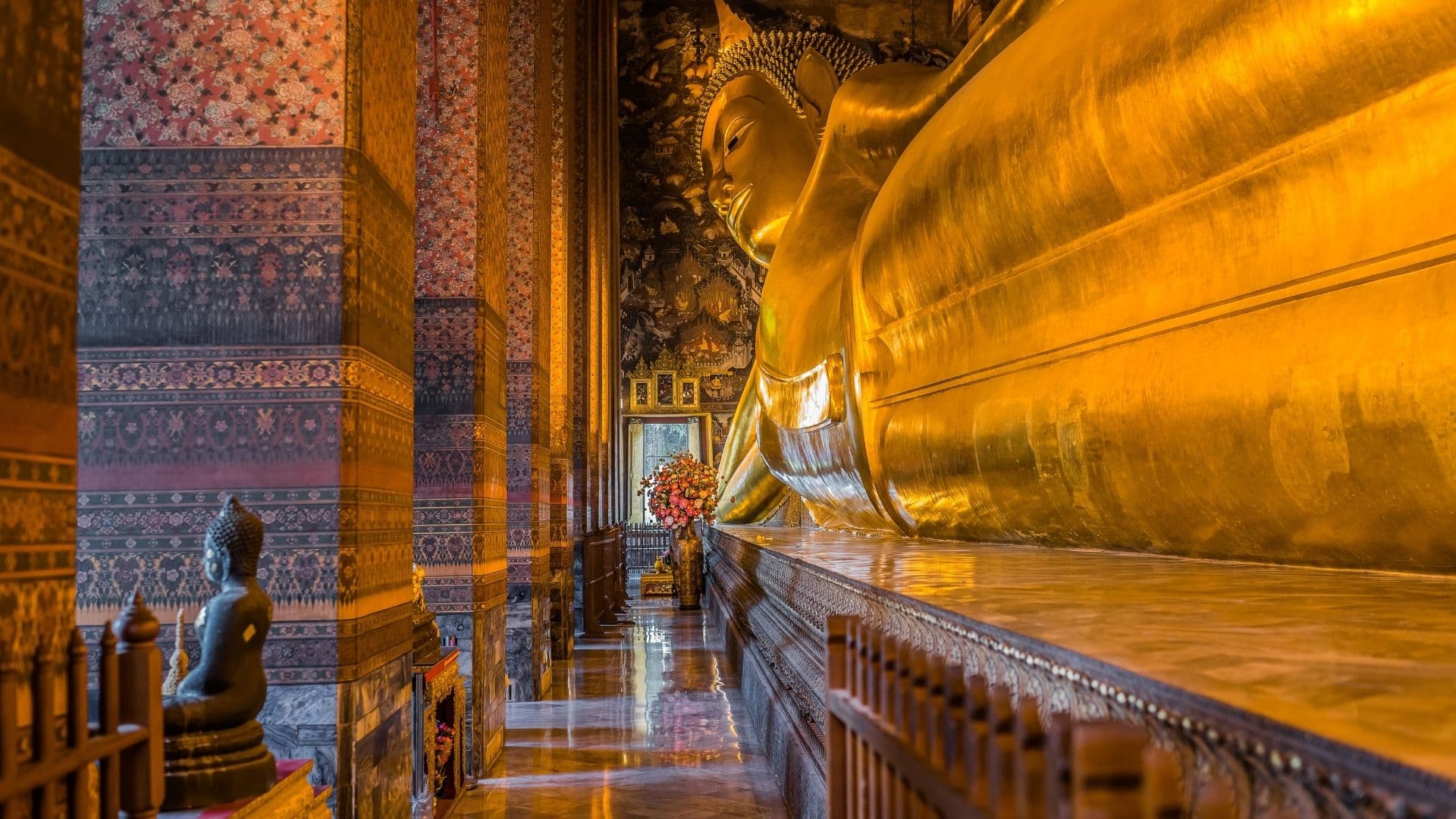
Our advice is simple: go to the gate yourself. Do not trust anyone on the street about opening times. Walk to the entrance and see. If you want zero hassle at the big temples, a guided visit like our Grand Palace and temples tour takes this problem off the table. And remember the dress code: covered shoulders and knees, explained in our temple dress code guide.
How to spot a shopping detour once you are moving
Sometimes the detour starts after you get in. Watch for these signs:
- The driver stops "just for a moment" at a shop, a tailor or a jewellery store.
- He tells you he gets a fuel voucher if you go inside, even briefly.
- The route clearly heads away from where your map says you are going.
- A suspiciously low price was agreed at the start.
If it happens, stay calm and polite. Say firmly that you want to go straight to your destination. If he insists, pay what is fair for the distance covered, get out somewhere busy and switch to a metered taxi or the train. You never have to go into a shop.
Who a tuk-tuk is not for
We are honest with our guests about this. A tuk-tuk is not a good idea for everyone.
- Families with babies or small children. There are usually no seat belts and the sides are open. A metered taxi is the safer choice. Our Bangkok with kids guide has better options.
- Travellers with back or mobility problems. The seats are low, the ride is bumpy and getting in and out takes some bending.
- The hottest part of the day. Bangkok is hot from March to May and sitting still in traffic in the sun is no fun.
- Rainy afternoons. The rainy season runs roughly June to October, with short afternoon storms. The rain comes in sideways.
- Anyone with luggage. There is barely room for you, let alone a suitcase.
The cool and dry months, roughly November to February, are the most pleasant time for an open-air ride.
A guided tuk-tuk tour: the stress-free way to try one
If the idea of negotiating on a busy street puts you off, there is an easier way. A guided tuk-tuk tour lets you enjoy the ride without bargaining, detours or guessing where you are going.
We book two of these with local guides we know:
- Bangkok by night in a tuk tuk: the city after dark from the open back of a tuk-tuk.
- Street food tuk tuk tour: a tuk-tuk ride through Bangkok's street food scene.
The tour cards show the live details, including what is included. For first-timers and nervous riders, this is the version we recommend most.
Our quick tuk-tuk checklist
Before you climb in, run through this:
- Is this a short, fun ride, or do I actually need the train, the boat or a taxi?
- Do I have my destination written down?
- Have we agreed a clear price, for the whole group, with no stops?
- Do I have small notes?
- Did a stranger just tell me my destination is closed? If yes, walk to the gate yourself.
For more traps to avoid on a first trip, read our Bangkok first-time mistakes guide.