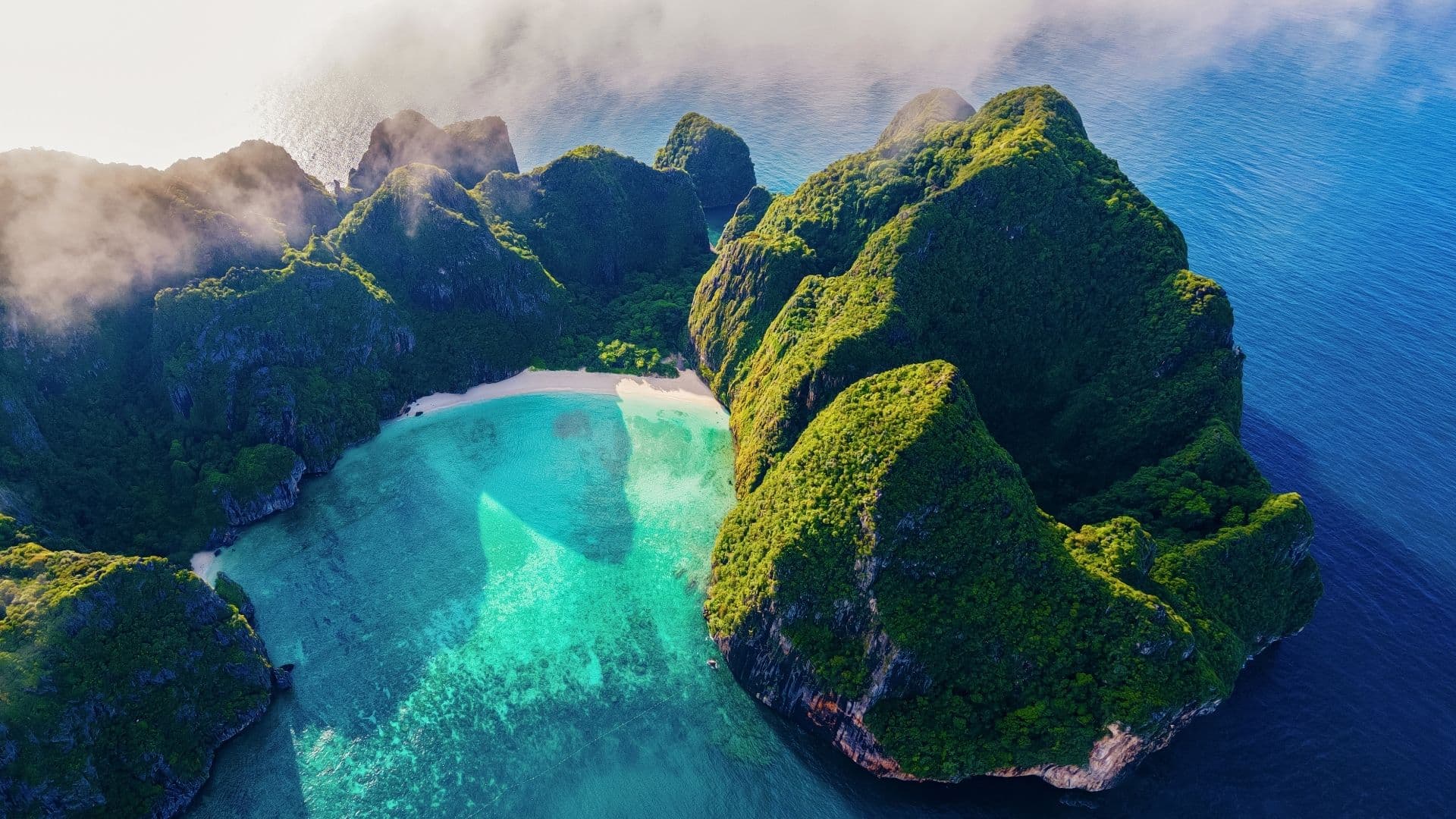
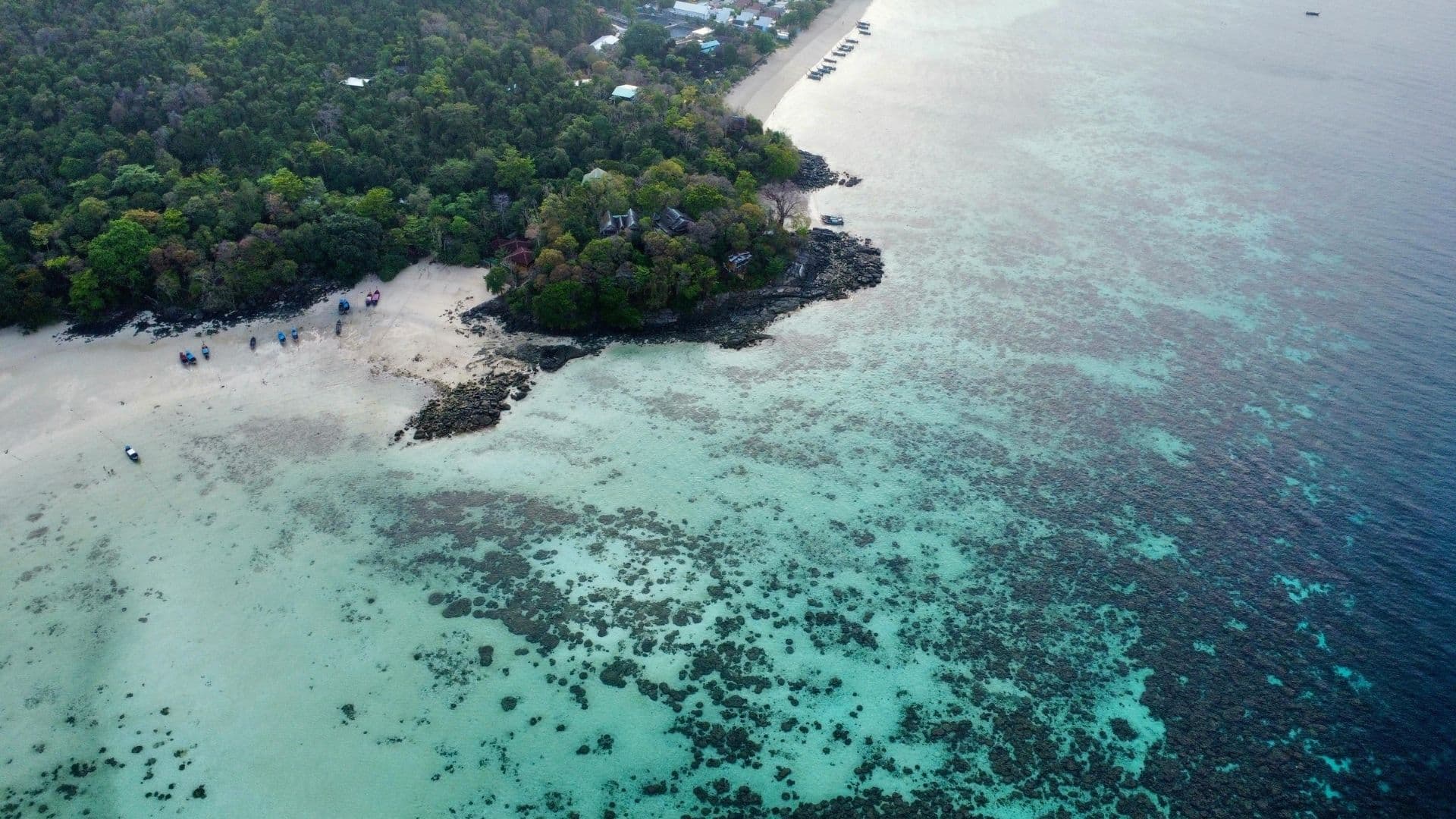
Our office is in Tonsai village. Every morning we walk the same lanes you will walk. We hear the ferries come in and we watch first-time visitors step off the pier with the same puzzled look: where are the roads?
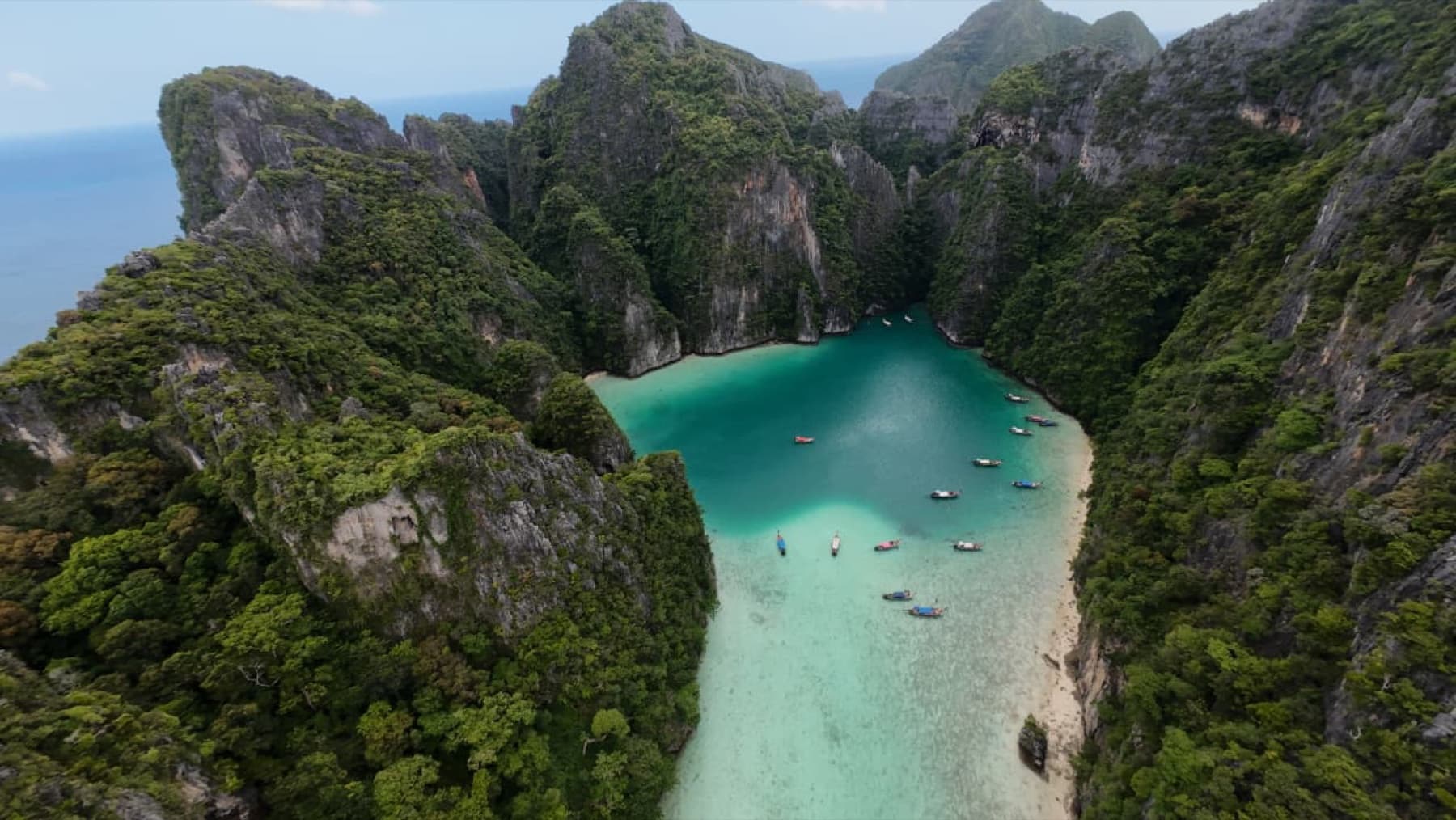
This guide explains Tonsai the way we would explain it to a friend before the trip. Where you land, how the village is laid out, where it gets noisy, and who should probably sleep somewhere else.
What Tonsai village actually is
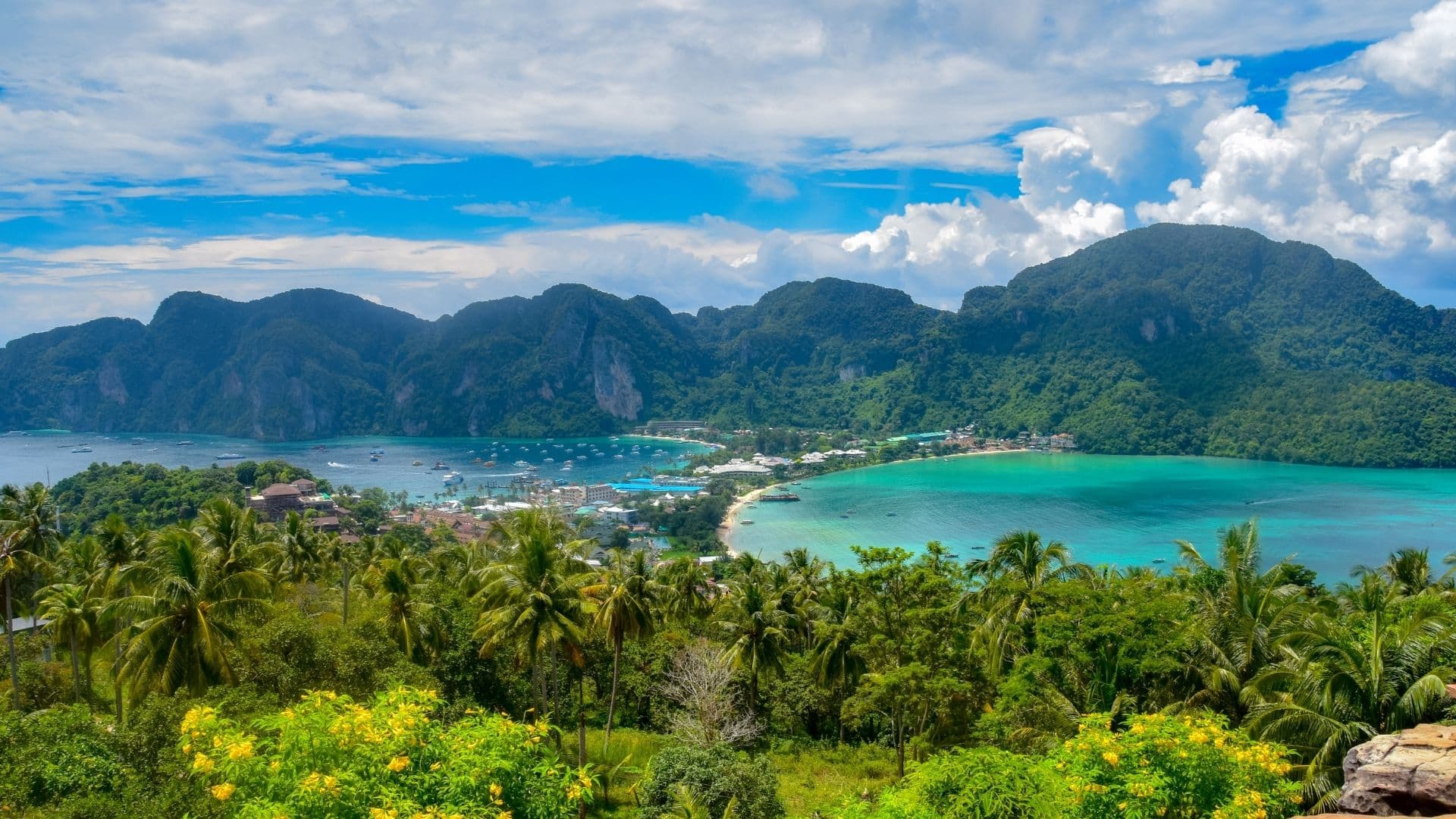
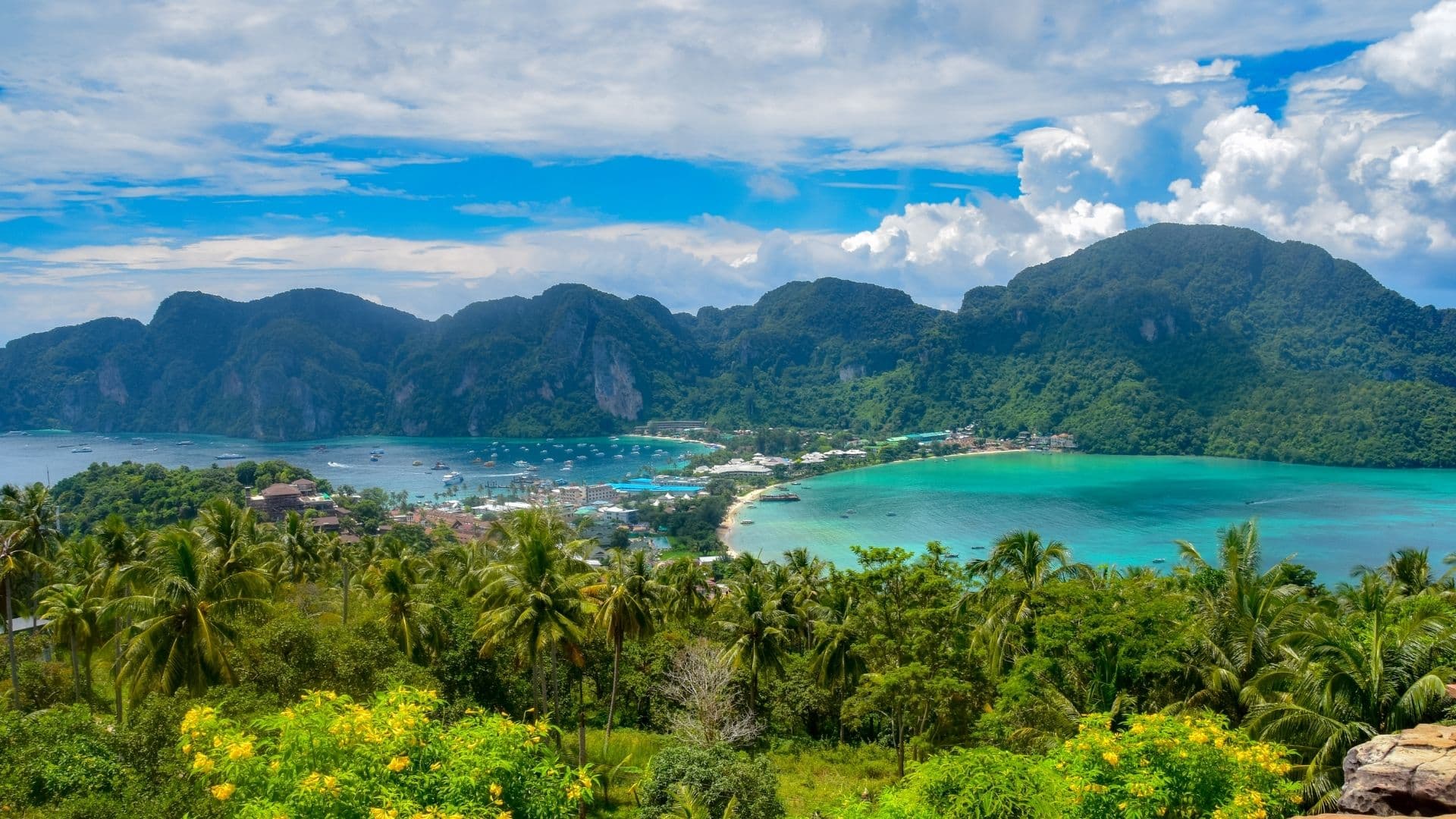
Tonsai is the main village of Koh Phi Phi Don, the larger of the Phi Phi islands. It is where almost every visitor arrives, and where most of the island's shops, food, guesthouses and tour desks are packed together.
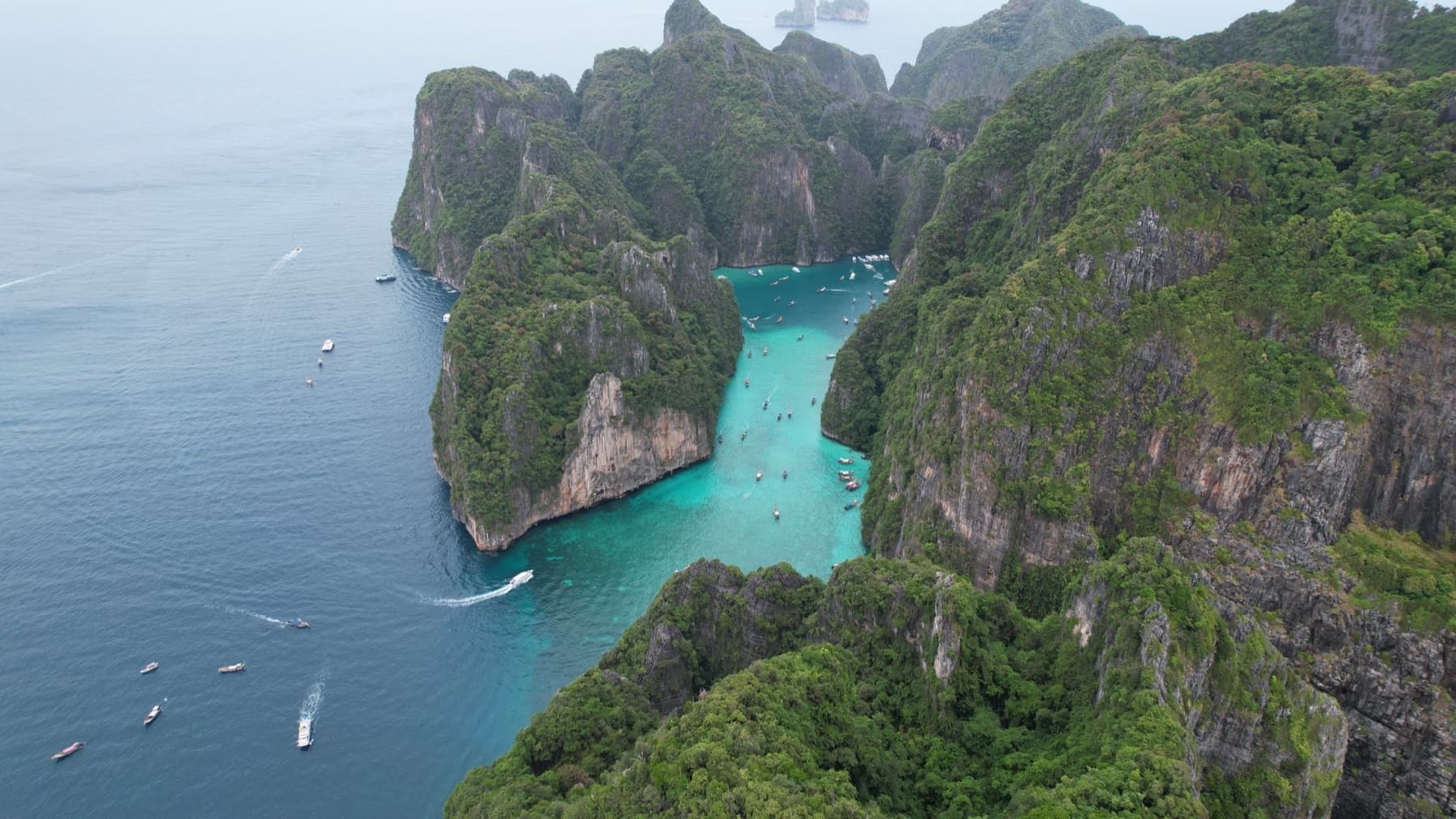
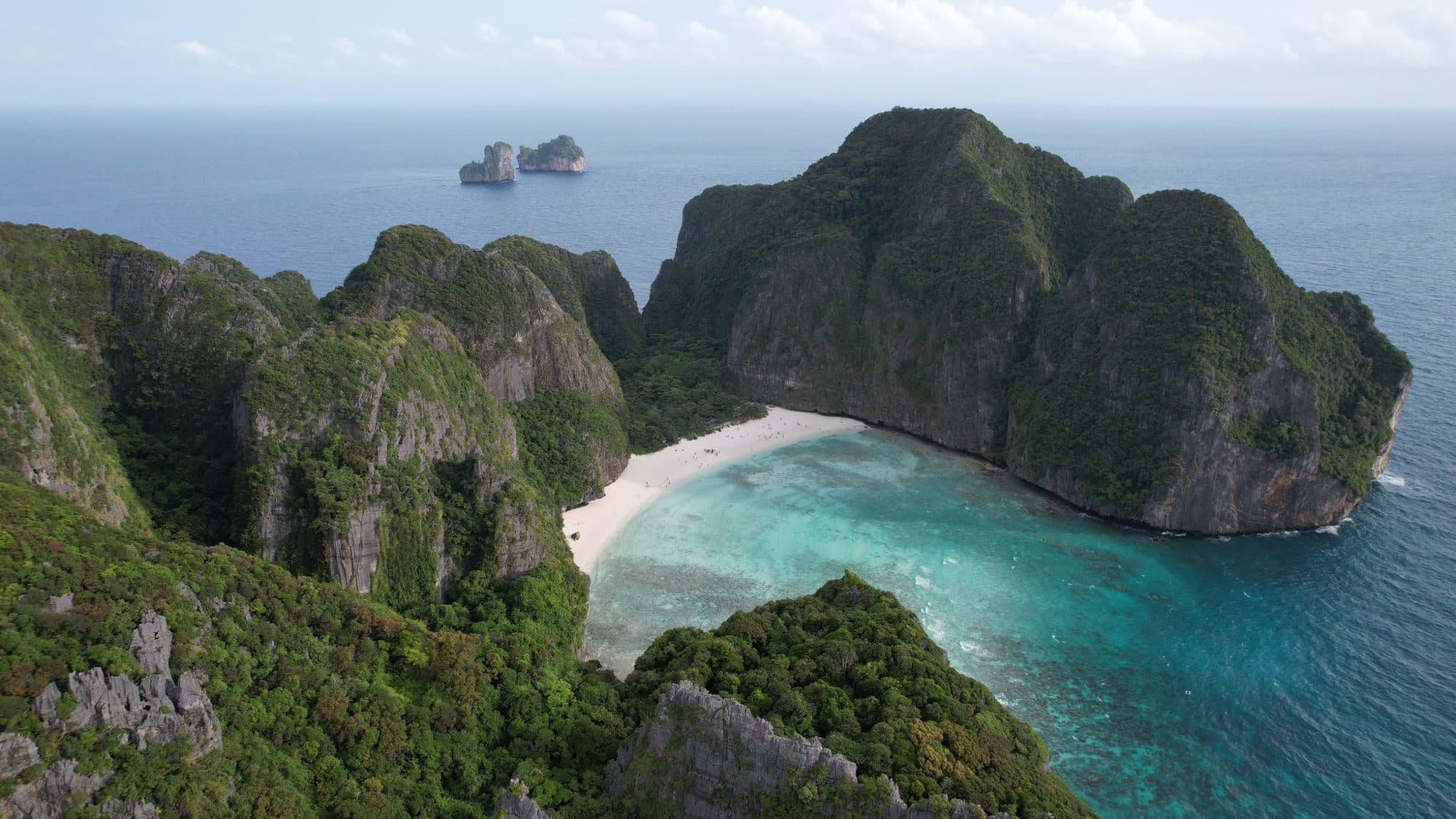
The village sits on an isthmus. That is a low, narrow strip of sand and buildings joining the two hilly halves of the island. On the south side is Tonsai Bay, with the main pier. On the north side is Loh Dalum Bay, a shallow, curved beach. You can walk from one bay to the other through the village in a few minutes.
There are no cars on Koh Phi Phi and no airport. You arrive by boat and you get around on foot. Tonsai is the island's busy heart: practical, crowded, cheerful, and rarely quiet.
Arriving at the main pier
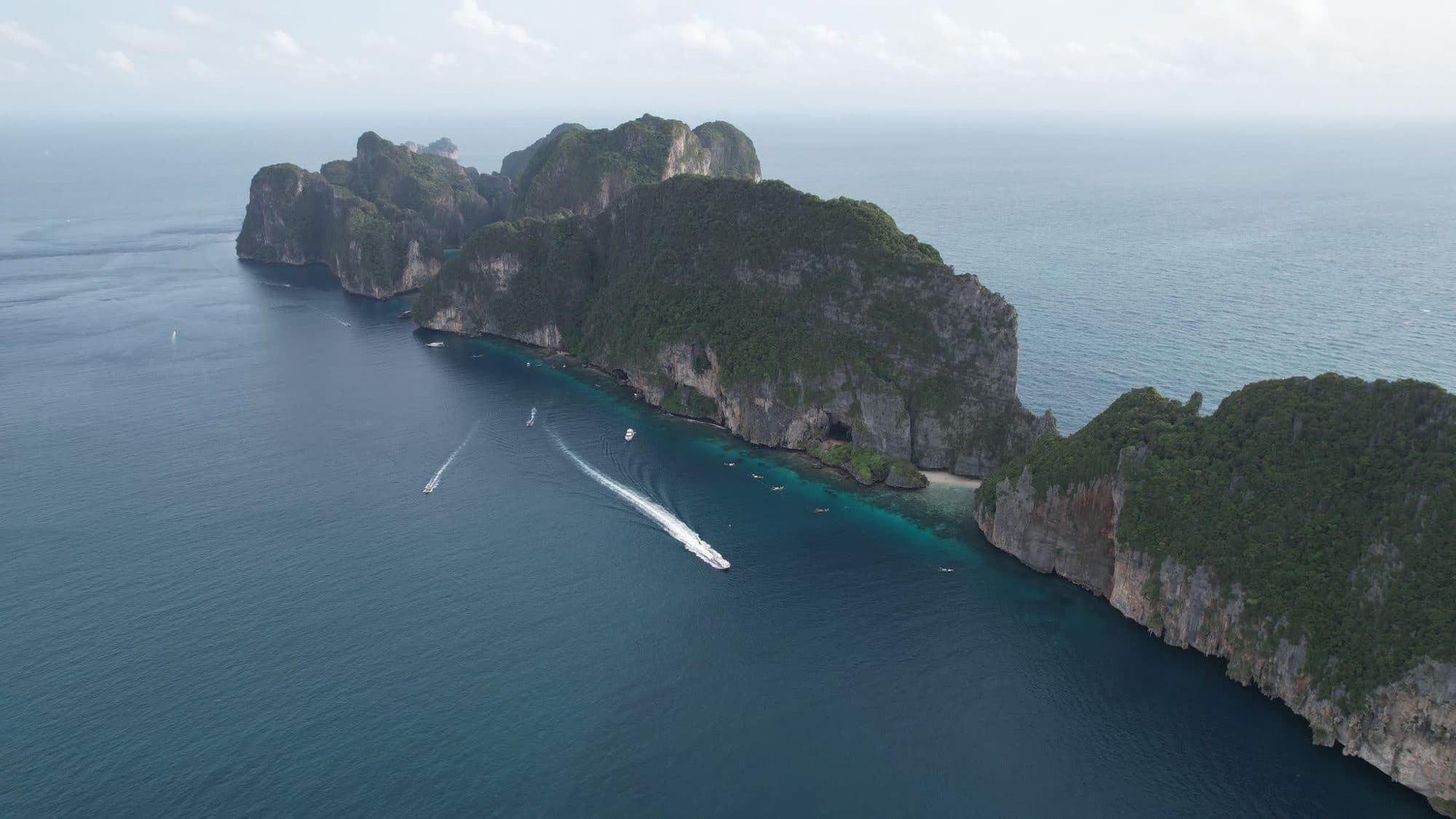
Ferries and speedboats from Phuket, Krabi and other islands land at the Tonsai pier. The ferry from Phuket takes about 2 hours, from Krabi about 1.5 to 2 hours, and speedboats about 1 hour. All the options are on our transfers page.
When you step off, the pier opens straight into the village. Expect a crowd, people holding hotel signs, and porters with push carts offering to carry bags. If your accommodation is a short walk away, you can usually roll your own suitcase. If it is up a hill or on another beach, a porter or a long-tail taxi makes sense.
Pack with the lanes in mind. Wheels struggle on sand and steps. On speedboats the luggage allowance is 10 kg per person. Our luggage guide explains bags, piers and porters in detail.
Walking only: how to get around
Tonsai is a maze of narrow lanes. There are no taxis and no tuk-tuks. You will share the path with bicycles, delivery carts and other walkers, so keep to one side and look behind you before you stop for a photo.
A few honest tips from walking it every day:
- Wear sandals that grip. Lanes can be wet after rain and some areas have steps.
- Download an offline map before you arrive. Our Koh Phi Phi map helps you place your guesthouse before you land.
- Leaving Tonsai for other beaches means walking trails over the hills, or taking a long-tail boat from the bay.
If stairs and uneven paths are hard for you, read our page on seniors and reduced mobility before booking a room on a hillside. Ask your accommodation exactly how far it is from the pier and whether there are steps.
Tonsai Bay side vs Loh Dalum side
The village has two moods, depending on which bay you are closer to.
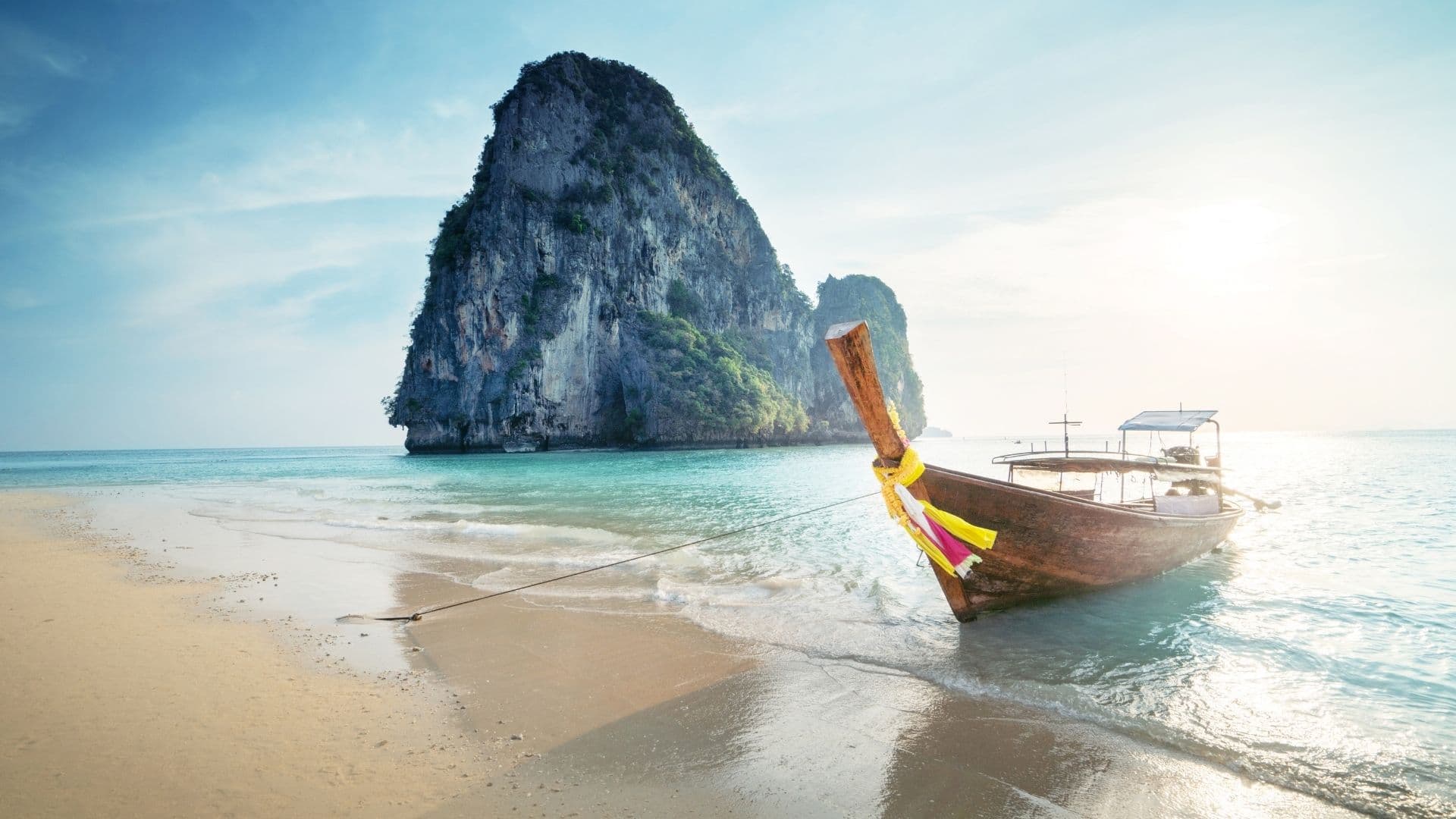
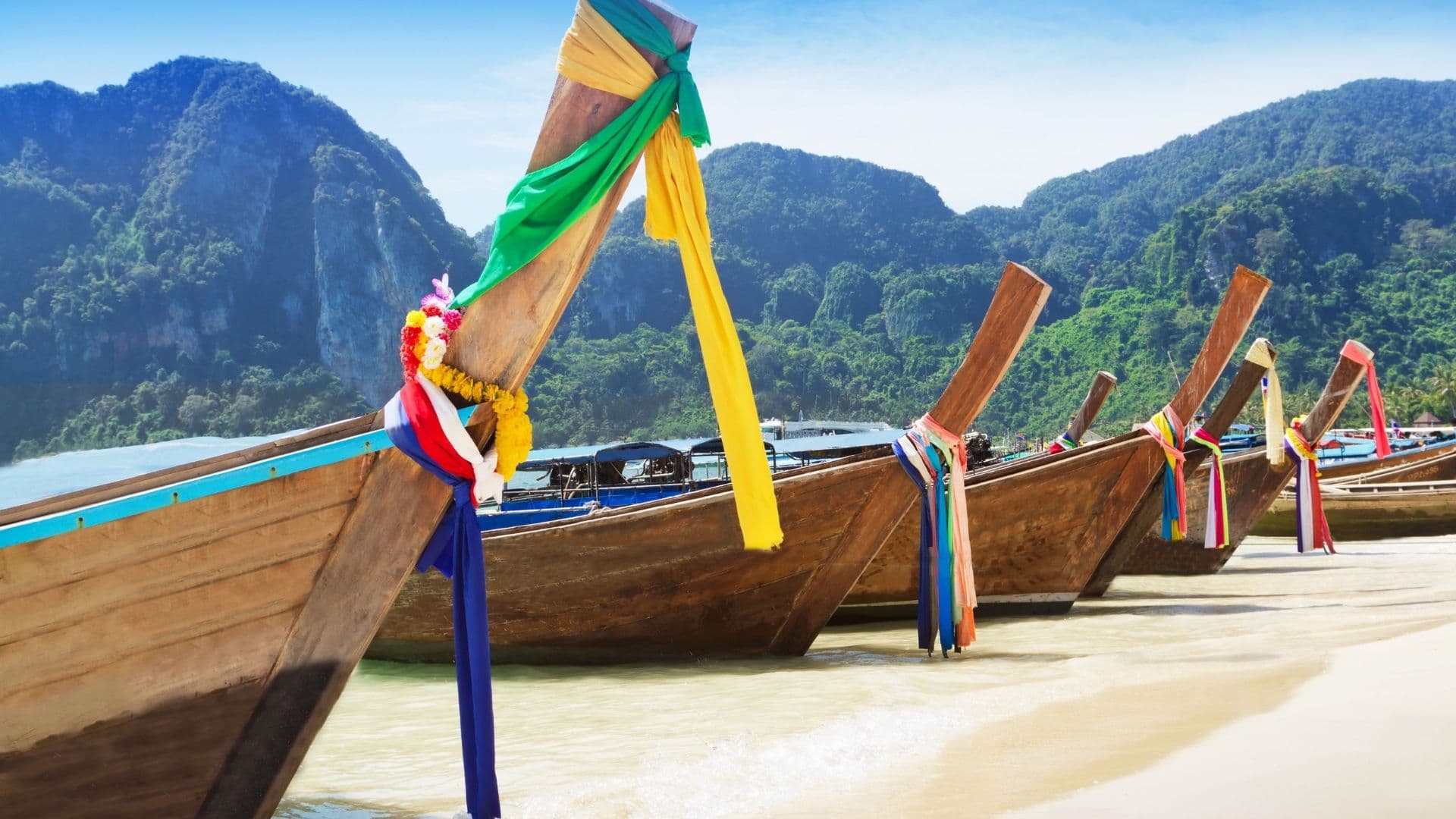
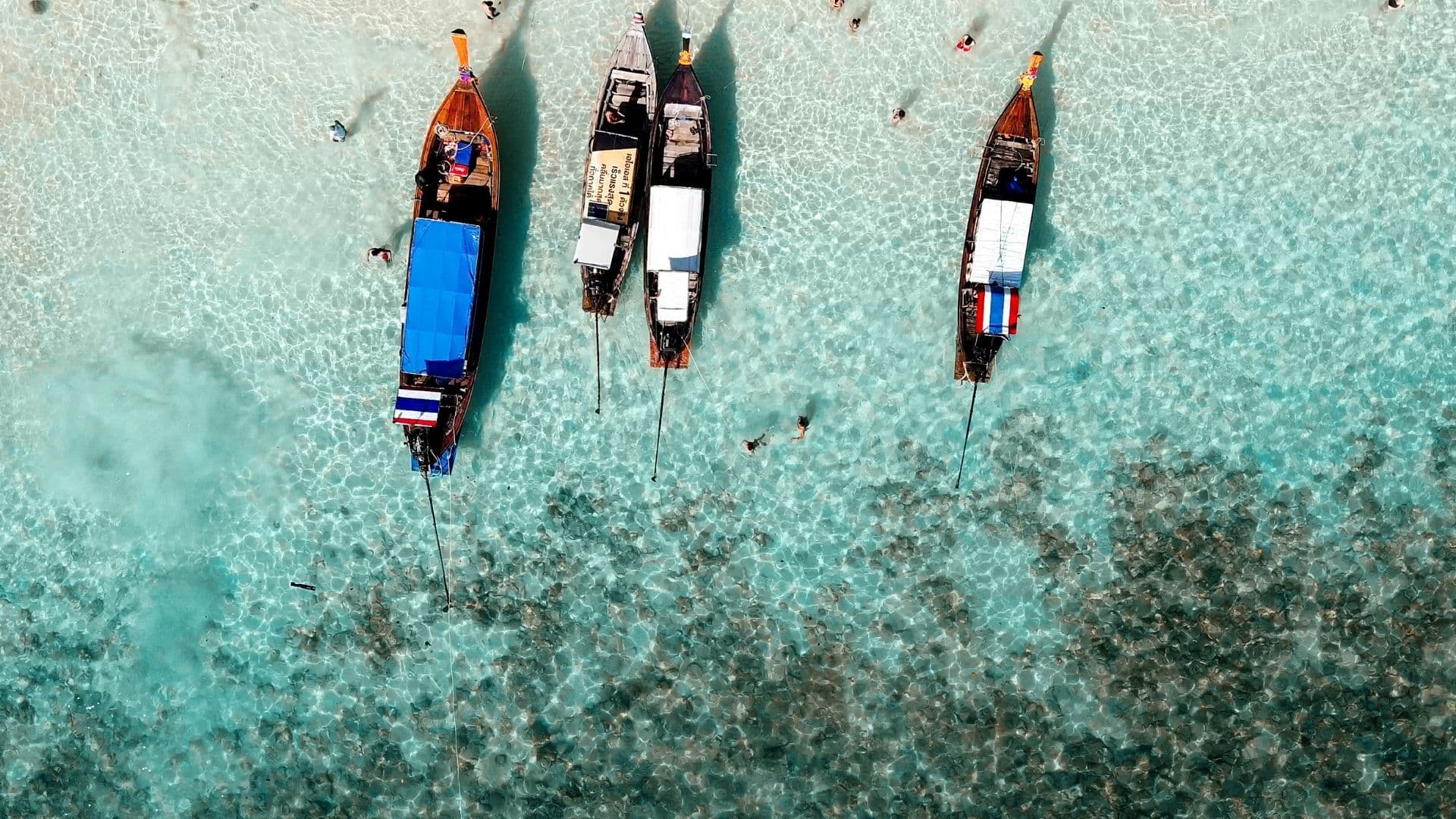
The Tonsai Bay side is the working side. Boats come and go all day, long-tails line the shore, and the lanes near the pier are full of tour desks, small shops and places to eat. It is busy in the daytime and calmer late at night than the other side.
The Loh Dalum side is the beach side. The water is shallow and the bay is pretty in the daytime. At low tide the sea pulls far back and you can walk out on the sand. In the evening this beach turns into the island's party strip. Our Loh Dalum guide covers it by day and by night.
In the middle, the lanes mix both: food stalls, laundry shops, pharmacies, souvenir shops and small guesthouses stacked side by side.
Night noise: who Tonsai is not for
We will be direct. If you sleep near Loh Dalum, you will hear music late into the night. Bass travels across the flat isthmus, and earplugs help but do not solve it.
Tonsai is not for you if you want silence at night, if you are travelling with small children who go to bed early, or if you are on a honeymoon and picture a quiet bungalow by the sea. Look at Long Beach or Laem Tong instead and come to Tonsai for an evening. Our where to stay guide compares the areas honestly.
Tonsai is great for you if you like to step out of your door into food, bars and boats, if you are a solo traveller or a group of friends, or if you are staying a short time and want everything within walking distance.
A middle path: choose a room in Tonsai but on the hill side or near Tonsai Bay, away from Loh Dalum. Ask the place directly which way your room faces. For the full evening picture, read our nightlife guide.
Everyday life: food, shops and essentials
Almost everything you need on the island is in Tonsai. There are convenience stores, pharmacies, laundry services, cash machines, small markets and many places to eat, from street stalls to sit-down restaurants. We do not name businesses: walk a lane or two and you will find plenty of choice.
A few practical points:
- Carry some cash. Many small places prefer it, and the Maya Bay national park fee is paid in cash on arrival: 400 THB per adult and 200 THB per child aged 4 to 11.
- Bring a refillable water bottle. Many shops and guesthouses can refill it, and it cuts plastic on a small island.
- Things are more expensive than on the mainland, because everything arrives by boat.
The village wakes up slowly. Early morning is the calmest time to walk the lanes, before the first boats bring day trippers in.
Booking boats from Tonsai, and where we fit in
Tonsai is full of tour desks. Many sell the same trips. Before you book anything, ask simple questions: which boat, which route, is the park fee included on this trip, and what happens if the weather turns.
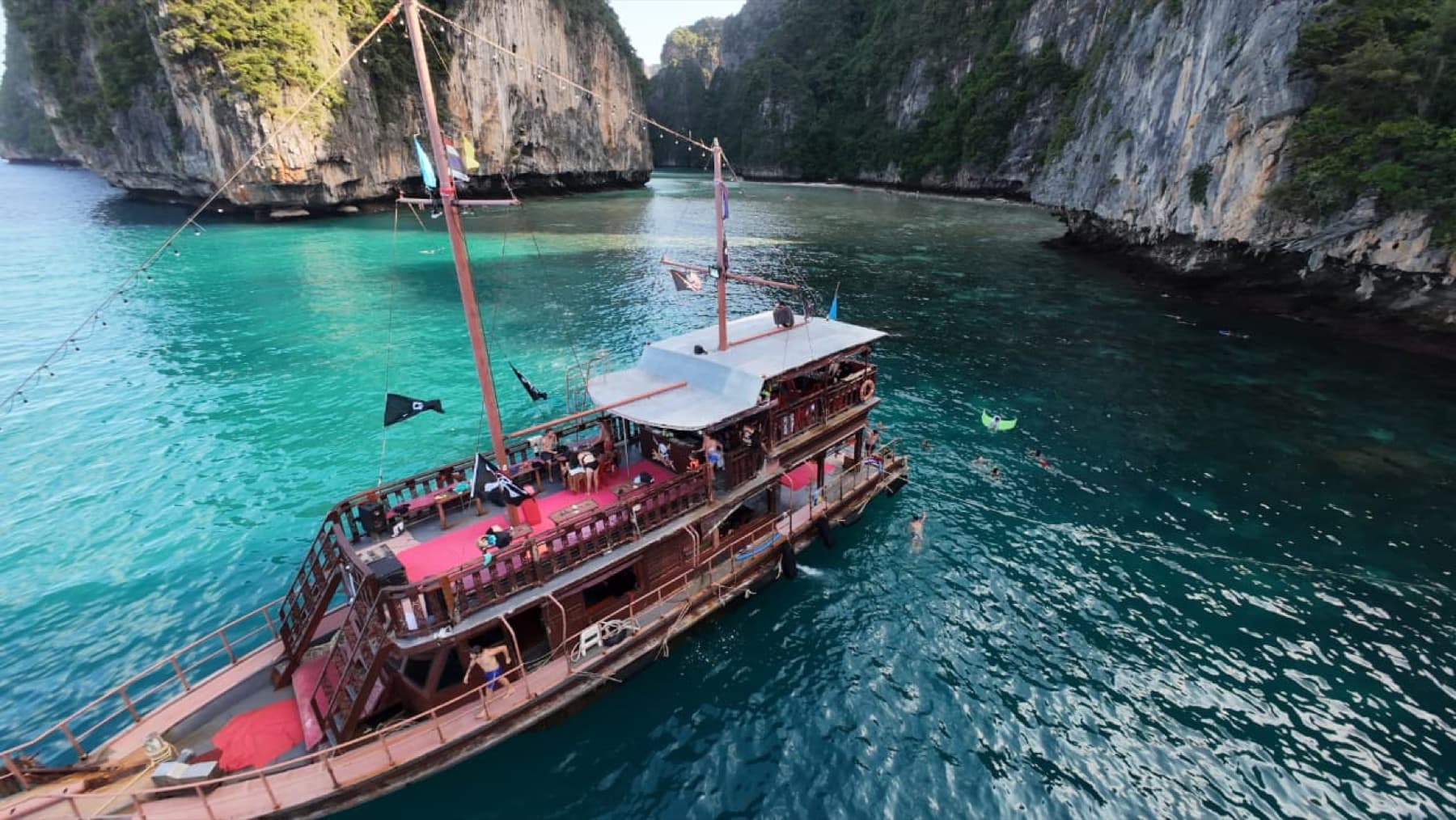
Our office is in Tonsai and our own boats leave Koh Phi Phi every day. If you want Maya Bay before the day-tripper boats from Phuket and Krabi arrive, look at Morning Maya, our sunrise trip. If you prefer your own pace, a private long-tail lets you choose where to stop. Tour cards show the live price and duration.
Tours from Koh Phi Phi can be booked online until 20:00 the day before. The Pirate Boat can be booked until 11:30 the same day, which is its check-in time. If we cancel because of the weather, you get a 100% refund or a free change of date.
Seasons in Tonsai
From November to April the sea is calm and the water clear, and Tonsai is at its busiest. February to April is the driest stretch. Book rooms early in high season, especially around the holidays.
From May to October the southwest monsoon arrives. Rain usually comes as short squalls, not all day. Some days the sea is rough and boat tours can be cancelled. The village is quieter and many visitors enjoy that.
The sea stays between 27 and 30 °C all year, so swimming from Loh Dalum is always pleasant when the tide is in.
A little history, and what to respect
The 2004 Indian Ocean tsunami hit on 26 December 2004. Because Tonsai sits on a low isthmus between two bays, the village was badly damaged. You will see evacuation route signs in the lanes today. Take a moment to note the nearest one to your room.
Tonsai is also a place where people live and work. Dress a little more modestly in the lanes than on the beach, keep music down in residential areas, and greet people with a smile. Our team notices, and so do our neighbours.
Leaving Tonsai
You leave the way you came: from the main pier. Give yourself time, because the pier gets crowded and boats board in order.
Our sources list the last boats back to Phuket at 15:30 for the ferry and 16:00 for the speedboat. Schedules change with the season, so always check the transfer page before you plan the rest of your day. Transfers can be booked online until 18:00 Bangkok time the day before.
If you have a flight, plan backwards from it and leave a margin. A missed boat on an island with no road is a missed evening.